
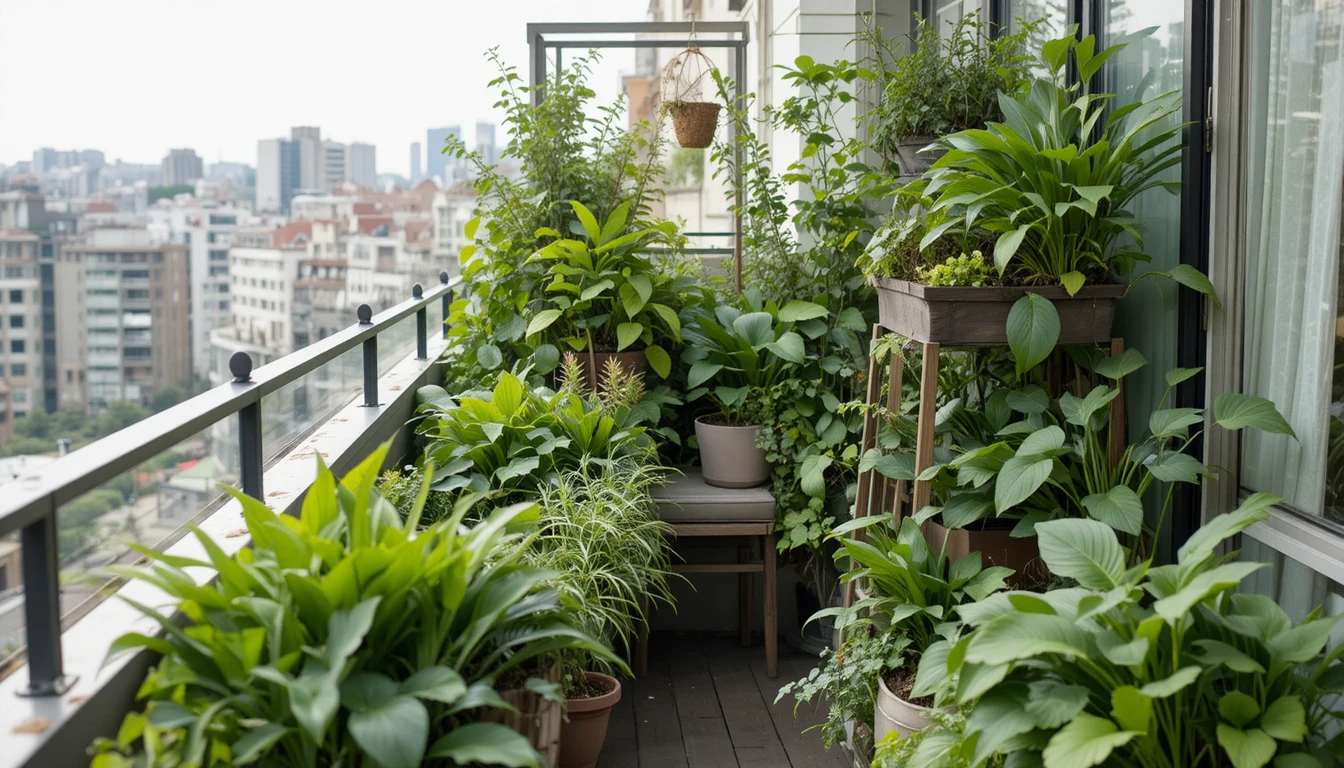
Congratulations! You’ve just absorbed a comprehensive guide to transforming urban spaces into sustainable sanctuaries. But knowledge is only the seed—action is the water and sunlight that makes it grow. Let’s bridge the gap between inspiration and implementation.
Your 30-Day Urban Green Living Launchpad
Week 1: The Foundation Phase
Day 1-3: The Microclimate Audit
- Morning (15 mins): Mark sun patterns on a simple sketch of your space at 9 AM, 12 PM, and 3 PM.
- Evening (10 mins): Note wind patterns and any sources of pollution or salt spray.
- Result: You’ll have a clear “sun map” identifying full sun, partial sun, and shade zones.
Day 4-5: The Container Collection & Soil Setup
- Action: Identify 3 potential containers (purchase or upcycle). Ensure drainage holes.
- Purchase: One bag of high-quality, peat-free potting mix and a bag of organic compost.
- DIY Option: Start a small bokashi bin or worm farm for future soil nutrition.
Day 6-7: The First Planting Decision
- Choose ONE of these starter kits based on your sunlight audit:
- Full Sun Starter: A patio tomato plant + basil companion in a 5-gallon container.
- Partial Sun Starter: A “cut-and-come-again” lettuce mix in a shallow window box.
- Shade/Indoor Starter: A snake plant and pothos for air purification.
- Weekend Project: Plant your chosen setup. Water thoroughly.
Week 2-3: The System Building Phase
Water Management: Set up one sustainable watering system.
- Easy: Place a bucket on your balcony to collect rainwater (if allowed).
- Intermediate: Convert one container to self-watering using a plastic bottle wick system.
- Advanced: Research and price a micro-drip irrigation kit.
Vertical Expansion: Add ONE vertical element.
- Easy: Install a hanging basket with trailing cherry tomatoes or nasturtiums.
- Intermediate: Mount a 4-pocket felt wall planter with herbs.
- Advanced: Build or buy a 3-tiered plant stand to maximize space.
Community Connection: Make one outreach.
- Find and visit your nearest community garden.
- Join a local gardening Facebook group or the r/UrbanGardening subreddit.
- Offer to water a neighbor’s plants when they’re away.
Week 4: The Optimization & Expansion Phase
Pest Patrol & Health Check: Daily 5-minute inspection.
- Look under leaves for pests.
- Remove any yellowing leaves.
- Feel soil moisture before watering.
Harvest & Enjoy: Even if it’s just one leaf of basil on your pasta, or one cut flower for your desk—consume the beauty you’ve created.
Plan Your Next Addition: Based on what you’ve learned, choose one new element from Chapter 4 to add next month.
Critical Urban Gardening Mistakes to Avoid
- Overwatering: The #1 killer of container plants. Stick your finger 2 inches into soil—if damp, wait.
- Under-potting: That cute little herb from the nursery will likely need repotting in 4-6 weeks. Plan for its adult size.
- Ignoring Weight: Wet soil is HEAVY. Distribute weight against load-bearing walls, not in the middle of an unsupported balcony.
- Planting Without a Plan: Don’t buy plants impulsively. Refer back to your sun map and have a vision for each plant’s purpose (food, beauty, air cleaning).
- Going It Alone: Urban gardening has a steep learning curve. Ask questions in online forums when you hit problems.
The Ripple Effect: How Your Small Garden Creates Big Change
Your balcony garden is more than personal wellness—it’s a node in an emerging ecological network:
- The Pollinator Pathway: Your flowering plants provide crucial “fueling stations” for bees and butterflies traveling through urban deserts.
- The Seed & Knowledge Share: Every plant you propagate, every tip you share, creates exponential impact.
- The Visual Proof: Your green oasis inspires neighbors, potentially transforming an entire building facade.
- The Carbon Calculus: While small, your plants sequester CO2. If 1,000 city dwellers each maintained 10 plants, that’s 10,000 tiny carbon sinks working daily.
- The Biophilic Signal: You’re demonstrating that cities aren’t opposed to nature—they can be redesigned around it.
Your Urban Green Living Toolkit: Quick Reference
For Instant Solutions, Remember:
- Yellow leaves + wet soil = Overwatering. Let dry out completely.
- Yellow leaves + dry soil = Underwatering or nutrient deficiency.
- Leggy, stretching plants = Not enough light. Move or supplement.
- Small holes in leaves = Likely caterpillars or slugs. Inspect at night.
- Sticky residue on leaves = Aphids. Spray with diluted soapy water.
The 5 Most Bomb-Proof Plants for Total Beginners:
- Mint: Grows anywhere, almost impossible to kill (keep contained).
- Snake Plant: Thrives on neglect, purifies air.
- Nasturtiums: Beautiful, edible flowers, self-seeding.
- Cherry Tomatoes (Tumbler variety): Prolific in hanging baskets.
- Kale: Cold-tolerant, cut-and-come-again for months.
The Long Game: From Balcony to Ecosystem
Urban green living is a journey, not a destination. Your first season might see failures—a wilted basil, a pepper plant that never fruited. This is data, not defeat. Each attempt teaches you about your unique microclimate.
Envision one year from now: Your space has evolved. You’re composting kitchen scraps, harvesting seasonal vegetables, saving seeds from your strongest plants, and perhaps even keeping a small beehive if regulations allow. You’ve become a resource for neighbors starting their own journeys.
Five years from now: You might be advocating for green roof policies in your city, designing edible landscapes for community spaces, or mentoring new urban gardeners. The skills you develop in patience, observation, and systems thinking will permeate other areas of your life.
Final Watering Can Wisdom
The most sustainable garden is the one that brings you joy and that you’ll maintain. Start smaller than you think. Celebrate the first sprout, the first bud, the first harvest—no matter how modest.
Your concrete jungle is waiting to bloom. And it starts with one pot, one seed, one intentional decision to grow.
Ready to begin? Here’s your very first assignment:
- Put this guide down.
- Look at your available space right now.
- Identify ONE spot that gets at least 3 hours of sunlight.
- Place a container there—even if it’s just a mug with a succulent tomorrow.
Growth happens in the doing. Welcome to the urban green living revolution.
Share your starting point with #MyUrbanGreenStart