
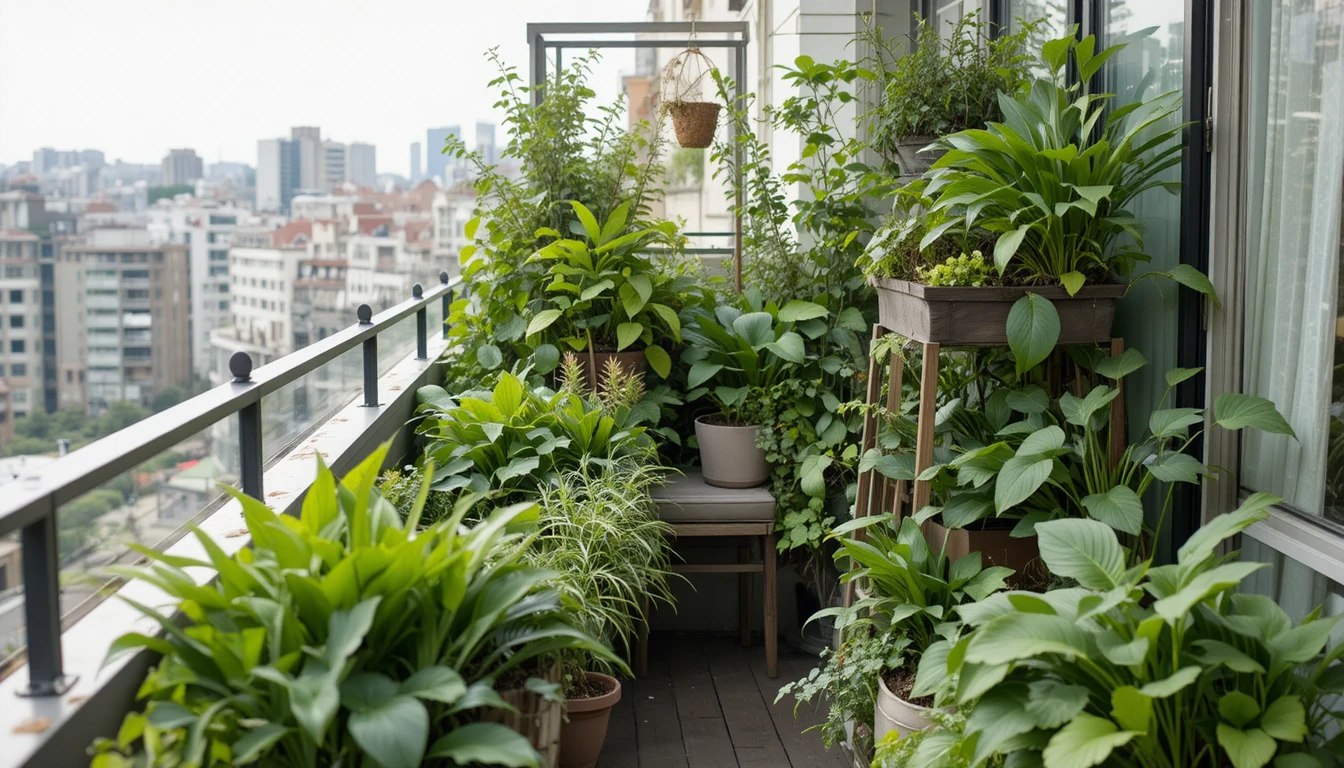
You’ve transformed your balcony into an ecosystem, cultivated mindfulness through soil, and connected with deeper philosophical currents. Now we expand the frame further—from personal practice to collective reimagining of what cities could be. Welcome to Urban Bioregionalism: the art and science of living as if the city were an integrated part of its surrounding life systems, rather than an extraction machine perched upon a landscape.
This 3500+ word guide explores how urban green living becomes urban systems living. We’ll move beyond individual containers to:


- Watershed Urbanism: Understanding your city as part of a hydrological system
- Foodshed Mapping: Tracing and shortening your food web
- Mycelial Networks: Applying fungal wisdom to social and ecological connections
- Urban Metabolism: Analyzing and optimizing your city’s material flows
- Decentralized Resilience: Building antifragile neighborhood-scale systems
- Bioregional Identity: Developing place-based urban culture
This is where your tomato plant connects to the aquifer, your compost connects to regional agriculture, and your balcony becomes a node in a city-scale living network.
Chapter 1: Watershed Urbanism – Your Balcony as Part of a River System
1.1 Finding Your Urban Watershed
Every drop of water on your balcony belongs to a watershed. Most city dwellers don’t know theirs.
The Exercise:
- Search “Your City + watershed map”
- Trace your exact location to the nearest creek (likely buried in pipes)
- Follow it to the river, then to the ocean or inland sea
- Calculate: When you water plants, where does excess go? Through storm drains to that buried creek
Urban Watershed Facts:
- Pre-development: 50% of rainwater infiltrated, 10% ran off
- Modern cities: 15% infiltrates, 55% runs off (carrying pollutants)
- Your balcony can shift these percentages at micro-scale
1.2 The Sponge City/Balcony Principle
China’s “sponge city” initiative offers principles for the urban gardener:
Implement at Micro-Scale:
- Intercept: Rain chains from downspouts to containers
- Infiltrate: Deep-rooted plants in containers with designed drainage layers
- Store: Connected rain barrel systems (neighbors coordinating creates neighborhood-scale storage)
- Purify: Wetland plants in container “bogs” that filter greywater (where legal)
The 1% Rule: If 1% of city balconies captured 50 gallons each during a storm, that’s millions of gallons kept from overloaded storm systems.
1.3 Groundwater Connection Meditation
Practice this when watering:
“This water fell on distant mountains, flowed through rivers my city buried, was treated with energy, pumped to my tap. Now I return some to the cycle through soil and plant transpiration. The same water molecules that flowed through ancient rivers now flow through this basil plant.”
Chapter 2: Foodshed Mapping & Urban Agroecology
2.1 Your 100-Mile Foodshed Analysis
Most city food travels 1500+ miles. Urban gardening starts to shorten that distance—to your balcony. But we can think more systematically.
The Three-Ring Foodshed Model:
Ring 1: Personal (0-10 feet)
- Your balcony/container production
- What percentage of your diet could this supply? (Realistically 5-15% for dedicated gardeners)
Ring 2: Neighborhood (0-1 mile)
- Community gardens
- Neighbors’ surplus
- Foraged urban fruit (often abundant and unused)
- Restaurant food waste → compost → soil
Ring 3: Bioregional (0-100 miles)
- Peri-urban farms
- Regional grain, bean, meat production
- Wild harvested foods from surrounding landscapes
Exercise: For one week, map every food item’s origin. Calculate your “food mileage.” Then design substitutions from closer rings.
2.2 The Urban Agroecological Network
Agroecology applies ecological principles to agriculture. Urban agroecology applies them to cities:
Principles in Action:
- Biodiversity: Not just many species, but functional diversity—plants that fix nitrogen, accumulate nutrients, attract predators of pests
- Nutrient Cycling: Closing loops from food waste back to food production at neighborhood scale
- Synergy: Designing relationships where elements support each other (beehives near fruit trees, chickens processing food waste)
Neighborhood-Scale Implementation:
- Skill & Tool Libraries: Specialized tools (fruit press, grain mill, dehydrator) shared among households
- Crop Specialization: Neighbors specialize in different crops, then trade
- Micro-Enterprise Incubation: Rooftop honey, balcony microgreens, fermented foods from surpluses
2.3 The Forgotten Urban Harvest
Most cities have enormous untapped food resources:
The “Freegan” Geography:
- Fruit trees in parks, alleys, abandoned lots
- Edible “weeds” (purslane, dandelion, lambsquarters often more nutritious than cultivated greens)
- Restaurant dumpsters (with caution and respect)
Ethical Harvesting Protocol:
- Always ask if on private property
- Take only what you’ll use
- Leave some for wildlife
- Never take rare or slow-growing species
- Consider giving back (planting, tending, propagating)
Chapter 3: Mycelial Thinking for Urban Systems
3.1 What Fungi Teach About Networks
Mycelium—the fungal network—offers profound metaphors and actual strategies for urban resilience:
Fungal Principles:
- Distributed Intelligence: No central brain, but effective problem-solving
- Resource Redistribution: Moving nutrients from areas of abundance to areas of need
- Communication: Chemical signaling across networks
- Collaboration: Mycorrhizal relationships with 90% of plants
3.2 Building Urban Mycelial Networks
Apply fungal wisdom to human systems:
Information Hyphae:
- Create neighborhood skill-sharing maps (digital or physical)
- Establish communication trees for surplus/giveaway alerts
- Develop “resource flow” understanding: Who has what waste? Who needs what input?
Nutrient Redistribution Systems:
- Community Compost Hubs: Multiple households → centralized composting → distributed finished compost
- Food Rescue Networks: Connecting stores/restaurants with excess to those who can use it
- Tool & Resource Libraries: Like fungal networks distributing enzymes where needed
The Mycelial Mindset Shift:
From “How do I get what I need?” to “How does what I have connect to what others need?”
3.3 Actual Mushroom Cultivation as Systems Practice
Growing mushrooms completes cycles:
Urban Mushroom Cultivation Systems:
- Coffee Ground → Oyster Mushrooms: Collect from local cafes
- Cardboard → King Stropharia: Sheet mulching with mushroom spawn
- Hardwood Logs → Shiitake: Using pruned urban tree branches
The Closed Loop:
Coffee → mushrooms → spent substrate → garden compost → vegetables → food waste → compost…
Chapter 4: Urban Metabolism Analysis
4.1 Understanding Your City as an Organism
Cities consume resources (food, water, energy, materials) and produce wastes. This “metabolism” is typically linear and inefficient.
Personal Urban Metabolism Audit:
Track for one week:
- Water in (tap, bottled) and out (to sewer)
- Food in (all sources) and “out” (compost, trash)
- Energy in (electricity, gas, transportation fuel)
- Materials in (purchases) and out (recycling, trash)
The Goal: Shorten cycles, reduce throughput, increase circularity.
4.2 The Circular Balcony Economy
Transform your balcony from consumption endpoint to circular node:
Inputs Minimized:
- Make potting soil from compost + leaf mold + local resources
- Save seeds
- Capture rainwater
- Use salvaged containers
Outputs Utilized:
- Food waste → compost
- Greywater (where legal) → irrigation
- Plant trimmings → mulch or craft materials
- Seeds → sharing network
Throughput Reduced:
- Grow perennial crops (less replanting)
- Choose durable materials
- Repair rather than replace
4.3 Neighborhood-Scale Material Flows
Map invisible connections:
Exercise: Create a “resource flow” map of your block showing:
- Where food enters (stores, deliveries)
- Where organic waste exits (trash day)
- Where yard waste goes
- Where construction materials come and go
Intervention Opportunities: Connect flows—neighbor’s leaves become your mulch, your surplus seedlings fill their containers.
Chapter 5: Decentralized Resilience & Distributed Systems
5.1 The Vulnerability of Centralized Systems
Modern cities depend on:
- Centralized water treatment and distribution
- Long-distance food supply chains
- Grid electricity
- Centralized waste management
The Resilience Paradox: Efficiency creates fragility. A disruption anywhere breaks the whole.
5.2 The Distributed Urban Resilience Portfolio
Build neighborhood-scale redundancy:
Water Resilience:
- Individual: Rain barrels (100 gal/household = neighborhood backup supply)
- Neighborhood: Identifying emergency water sources (creeks, springs, pools)
Food Resilience:
- Tier 1: Home storage (1-2 weeks)
- Tier 2: Balcony/community garden production (seasonal)
- Tier 3: Neighborhood skill/knowledge sharing (how to process, preserve, forage)
Energy Resilience:
- Solar-charged battery systems for critical needs
- Human-powered tools (hand pumps, grain mills)
- Neighborhood energy-sharing agreements
5.3 The “Deep Adaptation” Garden
Incorporate plants for multiple possible futures:
Climate-Adapted Palettes:
- Drought-resistant but flood-tolerant
- Heat-loving but cold-hardy
- Pest-resistant without chemicals
Multi-Use Plants:
- Paulownia: Fast-growing, nitrogen-fixing, bee-friendly, timber potential
- Willow: Biomass, medicinal (aspirin precursor), living structures
- Bamboo: Construction, edible shoots, erosion control, privacy screening
The Prepper’s Paradox: Prepare seriously, but live abundantly now. Your resilience garden should be beautiful and productive in ordinary times, not just emergency stash.
Chapter 6: Developing Bioregional Urban Identity
6.1 What Is a Bioregion?
A bioregion is defined by:
- Watershed boundaries
- Plant and animal communities
- Geological and climatic patterns
- Indigenous cultural boundaries (often aligned with ecological ones)
Discover Your Bioregion:
- What watershed are you in?
- What was the ecosystem type before development? (Oak savanna? Wetland? Prairie?)
- What indigenous nations lived here sustainably?
- What are the keystone species? (Salmon? Bison? Acorns?)
6.2 Bioregional Urban Design
Apply bioregional thinking to city spaces:
Native Plant Gardening:
- Not just aesthetic, but ecological
- Supports local pollinators and birds
- Adapted to local climate (less water, fewer inputs)
- Deepens sense of place
Seasonal Awareness Practices:
- Create a bioregional calendar: when do acorns fall? When do certain birds migrate through?
- Celebrate seasonal markers: first tomato, first frost, rainy season start
- Align gardening activities with natural signals rather than calendar dates
6.3 Urban Bioregional Culture
Create place-specific urban culture:
Bioregional Urban Traditions:
- Neighborhood acorn harvesting and processing days
- Annual native plant seed exchange
- Seasonal feasts based on local abundance
- “Watershed walks” tracing buried creeks
Storytelling as Ecological Practice:
- Learn and share stories of place: geological history, ecological succession, indigenous presence
- Create new stories: “The balcony that fed the block during the heatwave”
- Document neighborhood ecological change over years
Chapter 7: Implementing Systems Change – Practical Projects
7.1 The 1% Neighborhood Transformation Project
Change doesn’t require majority participation. 1% engaged citizens can transform systems.
Phase 1: Mapping (Month 1-2)
- Create neighborhood resource map (skills, tools, spaces)
- Map sun/shade patterns for potential garden sites
- Identify waste streams and potential uses
Phase 2: Pilot Projects (Month 3-6)
- One shared compost hub
- One tool library
- One seed-saving initiative
- One neighborhood harvest festival
Phase 3: Network Weaving (Month 7-12)
- Connect initiatives into supporting network
- Document and share successes
- Invite next 1%
7.2 Policy Leverage Points for Systems Gardeners
Individual action meets policy change:
Easy Wins:
- Right to Dry: Legalize clotheslines (reduces energy use)
- Right to Rain: Legalize rainwater harvesting
- Right to Grow: Remove barriers to front yard/balcony gardening
Medium-Term Goals:
- Municipal compost pickup
- Green roof/wall incentives
- Zoning for urban agriculture
Long-Term Vision:
- Watershed-based urban planning
- Circular economy mandates
- Bioregional food system development
7.3 The Urban Bioregionalist’s Toolkit
Digital Tools:
- Falling Fruit (forage map)
- ShareWaste (compost connection)
- iNaturalist (species identification)
- OpenStreetMap (community mapping)
Analog Tools:
- Soil testing kit
- Hand lens for close observation
- Journal for seasonal notes
- Seed saving supplies
Social Tools:
- Gift economy mindset
- Conflict resolution skills
- Narrative change capacity
- Celebration rituals
Conclusion: The City as Living System
We began with a single container on a balcony. We end with the realization that balcony is connected to watershed, to foodshed, to social networks, to material flows, to climate systems, to deep time.
The urban bioregionalist understands:
- The water in their watering can fell as rain on mountains they may never see
- The soil in their containers contains geology from ancient epochs
- The seeds they save carry genetic memory of adaptation
- The food they grow connects them to pollinators, decomposers, nutrient cycles
- The surplus they share weaves social fabric
- The knowledge they develop becomes cultural inheritance
Your balcony garden is not an isolated hobby. It is:
- A water catchment system
- A carbon sequestration node
- A biodiversity hotspot
- A food production site
- A waste processing facility
- A social connection point
- A psychological sanctuary
- A philosophical statement
- A political act
- A systems intervention
The city is not separate from nature. It is nature—intensely transformed, but still subject to ecological laws. Urban bioregionalism is the practice of aligning our cities with those laws, not fighting against them.
Final Practice: The Bioregional Sit
Once a month, sit in your garden space and trace connections:
- Downward: Roots → soil → bedrock → tectonic plates
- Upward: Leaves → atmosphere → wind patterns → global climate
- Outward: Pollinators → neighboring gardens → green corridors → regional ecosystems
- Inward: Food → your body → your health → your consciousness
- Through Time: Seeds → ancestors → future generations → evolutionary time
You are not gardening in a container. You are gardening at a nexus of cosmic, planetary, ecological, and social processes. And your careful attention at this nexus changes everything.
The work continues. The mycelium spreads. The watershed remembers. Keep flowing.
This four-part series now provides a complete journey from practical balcony gardening to philosophical depth to systemic transformation. You have the tools to grow food, grow self, grow community, and grow a new relationship between city and biosphere. The invitation is endless.