
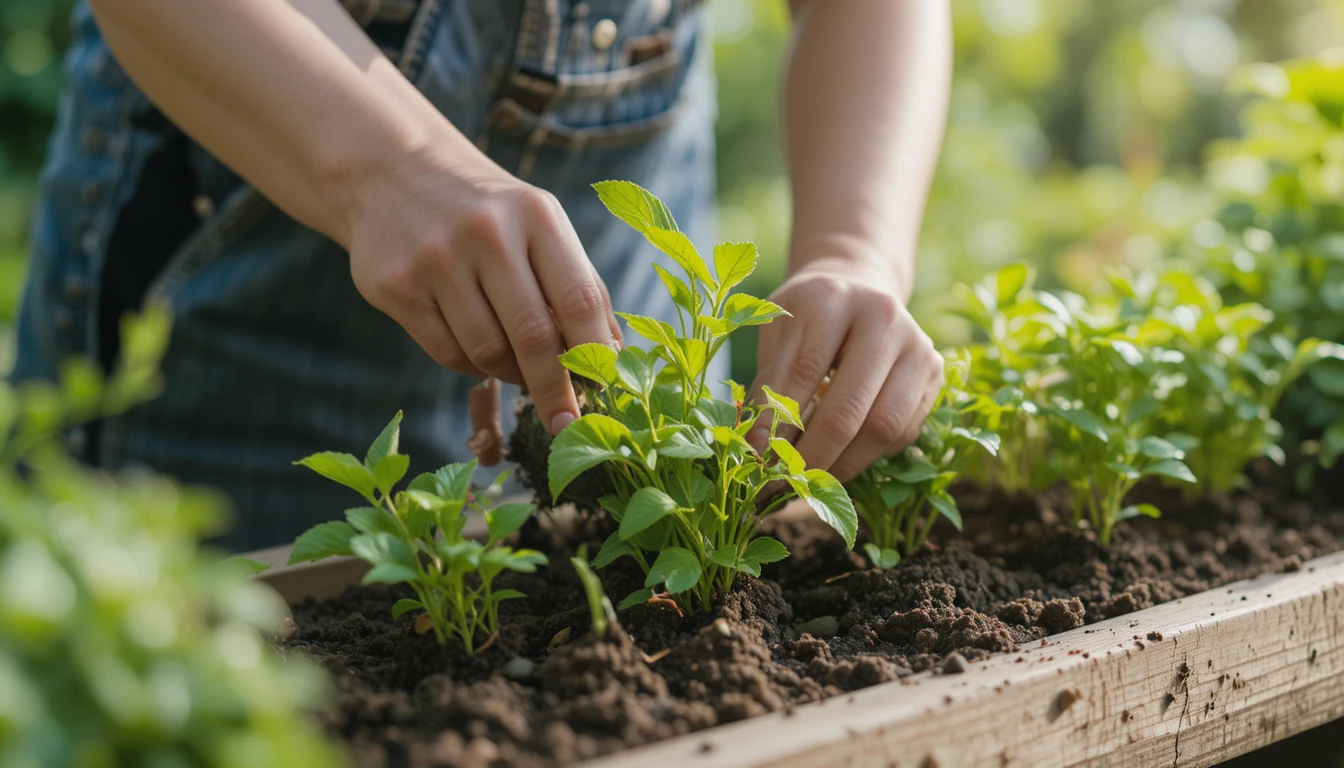
In a world increasingly mediated by screens and algorithms, there exists a profound, ancient technology waiting just outside our doors. Its interface is soil, its code is written in sunlight and rain, and its output is nothing less than the regeneration of life itself. This is the practice of eco-conscious gardening—a transformative discipline that redefines our relationship with the living world. Beyond sustainability lies regenerative reciprocity: the understanding that by investing in the health of our local ecosystems, we receive not just food and beauty, but psychological restoration, community resilience, and a vital role in planetary healing. This 3,800-word exploration invites you to see your garden not as a plot of land, but as a symbiotic partner in creating a more vibrant, resilient, and connected world.
Part 1: The Philosophical Groundwork—Changing Our Story of Place
1.1 From Control to Conversation: The End of Gardening as Dominion
For centuries, Western gardening has been an exercise in control: controlling nature’s wildness, controlling pests, controlling form. This mindset emerges from the same philosophical roots that drive ecological crisis—the belief that humans are separate from and superior to nature. The regenerative gardener undergoes a paradigm shift, moving from monologue to dialogue.

- Listening as the First Act: Before planning or planting, we listen. We observe where water flows after a storm, where frost lingers longest, which native species already call this land home. We learn the land’s vocabulary—its microclimates, its soil personality, its existing ecological relationships. This quiet attention replaces the impulse to impose our will with the humility to collaborate.
- Gardening as Facilitated Succession: In nature, landscapes evolve through successional stages—from bare ground to grasses, to shrubs, to young forest, to mature woodland. Conventional gardening often fights to maintain an artificial, early-successional state (like a lawn). The regenerative gardener asks: “What would naturally grow here over time, and how can I gently accelerate that process toward greater biodiversity and stability?” We become midwives to ecological maturity.
1.2 The Ethics of Enough: Cultivating Abundance Within Limits
Our consumer culture operates on a myth of infinite growth on a finite planet. The garden offers a powerful corrective: the tangible experience of enough. A single healthy zucchini plant can produce more than a family can eat—a lesson in prolific generosity within natural limits. This principle guides our choices:
- Selecting for Sufficiency: We choose plants that provide multiple yields—food, habitat, beauty, soil improvement—maximizing function per square foot.
- Designing for Cyclical Abundance: We create systems where “waste” is feedstock for the next cycle (compost, leaf mold, grass-clipping mulch), creating closed loops that minimize external inputs.
- Sharing as an Ecological Act: The natural over-abundance of the garden (extra tomatoes, squash, seeds) becomes a catalyst for community connection, strengthening social bonds as we redistribute the harvest.
Part 2: The Living Laboratory—Advanced Principles in Action
2.1 The Soil Food Web: Nurturing the Underground Civilization
Soil is not a blank canvas; it is a thriving metropolis. A single gram can contain billions of bacteria, miles of fungal hyphae, protozoa, nematodes, and microarthropods. Our role is that of a benevolent city planner, creating conditions for this underground civilization to flourish.
Advanced Soil-Building Strategies:
- Inoculating with Indigenous Microorganisms (IMO): Instead of purchasing commercial products, we can cultivate our own local microbial communities. The IMO Process involves capturing native microbes from a healthy local forest using a rice medium, then propagating them with sugar and wheat bran to create a potent, free soil inoculant perfectly adapted to your bioregion.
- Fermented Plant Juices (FPJ): By fermenting the fast-growing young shoots of nutrient-accumulating plants (like comfrey, nettle, or bamboo) with brown sugar, we create a liquid teeming with growth hormones, enzymes, and minerals, which acts as a powerful foliar feed and soil stimulant.
- Mineralizing with Rock Dusts: Glacial rock dust or basalt dust replaces mined minerals lost through erosion and agriculture. These finely ground rocks slowly release a spectrum of trace minerals, improving plant nutrition and contributing to long-term soil remineralization—a process that can take millennia naturally, accelerated to years.
2.2 Water as Liquid Intelligence: From Conservation to Celebration
Water management transcends mere conservation. It becomes the art of inviting water to linger, percolate, and celebrate life within the landscape.
Creating a Hydrological Sanctuary:
- The Sponge Garden Principle: Design your entire property to function like a sponge. Through swales (contour trenches), infiltration basins, and deep mulching, we aim to capture every raindrop, allowing it to sink into the aquifer rather than run off. This recharges groundwater, prevents erosion, and creates a buffer against both drought and flood.
- Constructed Wetlands for Greywater: A simple, gravity-fed system can direct water from showers and washing machines through a series of planted gravel beds. Bulrushes, cattails, and other wetland plants filter and clean the water, which can then safely irrigate fruit trees or ornamental plantings. This transforms a waste stream into a productive, beautiful ecosystem feature.
- Atmospheric Water Harvesting: In dry climates, techniques like air wells (structures designed to condense atmospheric humidity) or strategic use of dew ponds can supplement rainwater, tapping into invisible aerial rivers.
2.3 Beyond Companion Planting: Designing Guilds & Polycultures
Companion planting pairs two beneficial plants. Guild building designs entire mutually supportive plant communities, often centered on a “hub” species like a fruit tree.
Anatomy of a Fruit Tree Guild:
- Nitrogen Fixers: Ground-hugging legumes (white clover) or shrubs (Siberian pea shrub) that pull nitrogen from the air and make it available to the tree.
- Dynamic Accumulators: Deep-rooted plants (comfrey, yarrow) that mine minerals from the subsoil and bring them to the surface via their leaves.
- Pollinator Attractors: A succession of flowering herbs (borage, chives, oregano) that ensure bees are present throughout the season.
- Pest Confusers & Repellents: Strongly aromatic plants (garlic, society garlic, nasturtiums) that mask the scent of the target tree from pests.
- Living Mulch/ Groundcover: Low, spreading plants (strawberries, creeping thyme) that suppress weeds, retain moisture, and provide an additional yield.
- Mycorrhizal Fungus Companions: Plants like leeks or certain grasses that host the specific fungi that form symbiotic relationships with the tree’s roots.
This guild operates as a self-fertilizing, self-mulching, self-protecting mini-ecosystem, dramatically reducing maintenance while increasing yield and resilience.
Part 3: The Invisible Structures—Energy, Materials, and Social Ecology
3.1 The Energy-Literate Garden: A Net Producer, Not a Consumer
A garden should produce more energy (in the form of food, biomass, and ecosystem services) than the fossil fuel energy required to maintain it.
- The Solar-First Principle: Design to maximize photosynthesis, the garden’s primary energy source. Use vertical space (espalier, trellises), choose plants with layered canopies, and ensure sunlight is captured by leaves, not lost on bare soil or pavement.
- Human-Scale Technology: Prioritize human energy and simple machines. A well-designed wheel hoe is more efficient and pleasant than a roaring tiller. A scythe mows a meadow quietly and carbon-free. This re-engages our bodies meaningfully with the work of cultivation.
- From Consumer to Producer of Fertility: Stop importing fertility in bags. Produce it on-site via compost, chop-and-drop mulching, and animal integration. A small flock of chickens or ducks, managed in a movable “tractor,” can till, fertilize, and pest-control garden beds in preparation for planting, closing the nutrient loop.
3.2 Embodied Energy in Materials: The Ethics of Stone, Wood, and Plastic
Every path, bed, and structure holds a hidden history of extraction and transportation.
- The Five-Source Rule: For any hardscape project, try to source at least five materials locally, salvaged, or from waste streams. Examples: urbanite (broken concrete), local river stone, bricks from a demolished building, mulch from a local tree service, and lumber from a fallen neighborhood tree milled locally.
- The Lifecycle Mandate: Choose materials for their entire lifecycle. Untreated, rot-resistant wood (cedar, black locust) will eventually decompose safely. Plastics, even “recycled,” will fragment into microplastics. Natural materials return to the cycle; synthetics pollute it.
- Hugelkultur as Ultimate Upcycling: Building raised beds or mounds over a core of rotting logs and branches is the pinnacle of material wisdom. This buried wood acts as a moisture-retentive sponge and slow-release fertilizer for 10-20 years, turning “waste” into a productive, long-term garden asset.
3.3 The Social Root System: Gardening as Community Catalyst
A garden’s health is inextricably linked to the social ecosystem around it. Isolation is as unsustainable ecologically as it is socially.
- The Neighborhood Nursery: Propagate more plants than you need—from seeds, cuttings, and divisions. Create a small, honor-system nursery stand at the edge of your property, offering free or low-cost native plants and edibles to neighbors. This spreads ecological literacy and beauty.
- Skill-Shares & Harvest Potlucks: Host gatherings to teach pruning, seed saving, or fermenting. A potluck where every dish features an ingredient from someone’s garden celebrates local abundance and builds food sovereignty.
- The Garden as a Platform for Reconciliation: Acknowledge the history of the land. Research the Indigenous peoples of your area and, if possible, consult with local elders or organizations to incorporate culturally significant plants and practices. This turns gardening into an act of respectful remembrance and relationship-building.
Part 4: The Interior Landscape—What the Garden Grows in Us
4.1 The Mycorrhizae of the Mind: Cultivating Ecological Consciousness
Just as mycorrhizal fungi connect trees into a communicative network, the practice of regenerative gardening reconnects our neural pathways to patterns of ecological thinking.
- Developing Pattern Literacy: We learn to read the patterns of branching, leaf arrangement, root growth, and insect behavior. This literacy allows us to predict, problem-solve, and design in harmony with natural systems, a skill desperately needed in our broader society.
- Embracing Non-Linear Outcomes: In an industrial mindset, action A yields result B. In the garden, action A (planting a tree) yields results B through Z across decades: shade, fruit, habitat, soil building, windbreak, childhood memories, bird song. We learn to think in cascading benefits and deep time.
4.2 The Harvest of Resilience: Finding Agency in an Age of Anxiety
Facing climate change and ecological breakdown can lead to paralysis and eco-grief. The garden is an antidote, a sphere where our agency is immediate and tangible.
- The Micro-Climate of Hope: By creating a pocket of biodiversity, sequestering carbon in your soil, and cooling your immediate surroundings, you create a tangible, positive micro-climate of hope. This actionable success counters feelings of helplessness.
- Practicing Adaptive Resilience: Gardens teach us to adapt—to a late frost, a pest outbreak, a drought. This flexibility, this creative response to challenge, builds psychological resilience that translates to other areas of life. We become less brittle, more responsive.
4.3 The Aesthetics of Aliveness: Redefining Beauty
We must unlearn the sterile beauty of the magazine lawn and learn to see the aesthetics of aliveness.
- Beauty as Function: The busy buzz of pollinators becomes beautiful. The deep, dark color of rich compost is beautiful. The architectural skeleton of a frost-killed sunflower head left for winter birds is beautiful. Beauty is redefined as evidence of thriving ecological function.
- The Sublime in the Small: A perfect sheen of morning dew on a spiderweb, the intricate architecture of a monarch egg, the explosive force of a germinating seed—the garden trains us to find wonder and beauty in miniature, daily miracles, cultivating a state of sustained awe.
Epilogue: The Garden as a Testament to Time and Care
The regenerative garden is a legacy project. It is an open letter to the future, written not on paper, but in the language of rooting trees, deepening soil, and established wildlife corridors. It says: Someone was here who cared beyond their own lifespan. Someone understood that they were part of a continuum.
This work requires patience. You may not sit in the shade of the oak you plant. You may not taste the nuts from the chestnut tree. But you will have the profound satisfaction of knowing you turned your attention and labor toward making life more possible—for soil microbes, for pollinators, for birds, for your neighbors, and for those who will come after.
Start. Let your hands meet the earth. Plant a seed of reciprocity, and watch as it grows, not just into a plant, but into a new way of being in the world—connected, responsible, and joyfully entangled in the magnificent, messy web of life.