
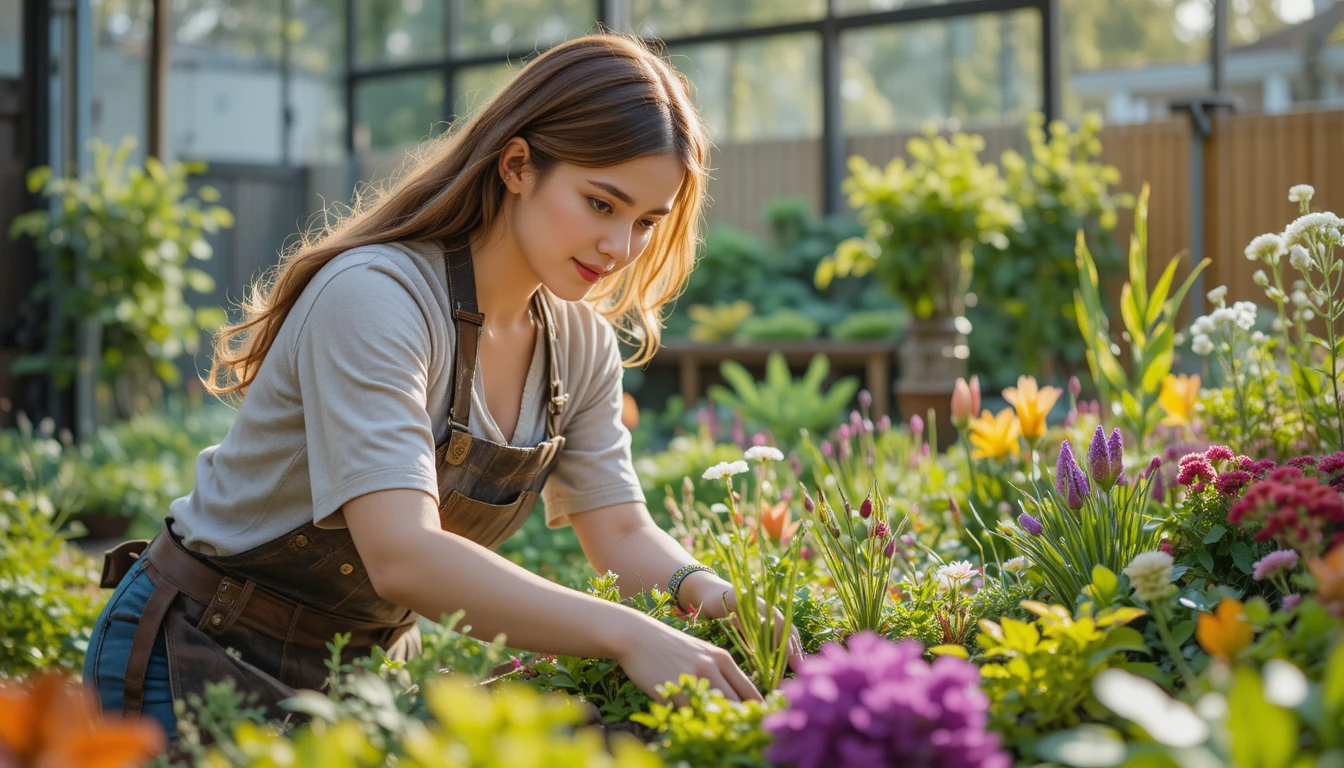
Beneath our feet lies a forgotten frontier—a teaspoon of healthy soil contains more microorganisms than there are people on Earth. Yet conventional gardening and farming have treated this miraculous ecosystem as mere dirt, leading to depleted soils, nutrient-poor food, and massive carbon emissions. Enter regenerative gardening—a paradigm shift that doesn’t just sustain but actively regenerates soil, biodiversity, and human health.
The statistics are staggering: global topsoil is disappearing at a rate of 24 billion tons annually, with some estimates suggesting we have only 60 harvests left before severe degradation. Meanwhile, soil holds the potential to sequester up to 250 billion metric tons of carbon—effectively reversing decades of industrial emissions. This isn’t just gardening; it’s planetary healing with a trowel.
Section 1: The Soil Microbiome Revolution
Understanding Your Soil’s Hidden Ecosystem
Modern soil science has revealed that soil isn’t an inert growing medium but a complex, living network often called the “soil microbiome.” This underground universe includes:
Bacterial Communities (the chemical engineers):
- Nitrogen-fixing bacteria that convert atmospheric nitrogen to plant-available forms
- Phosphorus-solubilizing bacteria that unlock minerals
- Disease-suppressing bacteria that protect plants
Fungal Networks (nature’s internet):
- Mycorrhizal fungi extending root systems by 100x, connecting plants in “Wood Wide Web”
- Decomposer fungi breaking down tough organic matter
- Pathogenic fungi managed through balanced ecosystems
Microfauna (the nutrient cyclers):
- Nematodes (both beneficial and predatory)
- Protozoa that consume bacteria, releasing nutrients
- Microarthropods like springtails and mites
A single gram of healthy soil contains up to 10 billion bacterial organisms representing thousands of species, plus kilometers of fungal hyphae. Regenerative gardening focuses on feeding and protecting this ecosystem rather than disrupting it.
The No-Till Transformation
Conventional wisdom: Turn soil annually to aerate and incorporate amendments.
Regenerative reality: Each tillage operation causes:
- 30-50% loss of soil organic matter through oxidation
- Destruction of fungal networks and soil structure
- Release of stored carbon as CO2
- Activation of weed seeds from the seed bank
No-till gardening methods have evolved beyond simple avoidance of digging:
Sheet Mulching (Lasagna Gardening):
- Cardboard or newspaper layer (weed suppression)
- High-nitrogen materials (grass clippings, manure)
- High-carbon materials (leaves, straw)
- Compost layer
- Mulch topping
Deep Mulch Systems:
- Permanent 4-6 inch organic mulch layer
- Plant directly into mulch or small compost pockets
- Mulch decomposes into soil, replenishing annually
Charles Dowding’s No-Dig Results: After 35+ years of side-by-side trials, his no-dig beds show:
- 50% higher yields in early years
- 90% less weeding time
- Dramatically higher worm populations (up to 500% increase)
- Better moisture retention during droughts
Section 2: Carbon Farming in Your Backyard
The Garden as Carbon Sink
While industrial carbon capture technologies struggle with scalability and cost, plants have been perfecting carbon sequestration for 400 million years. Through photosynthesis, plants pull CO2 from the atmosphere, converting it into carbohydrates—with up to 40% of these carbohydrates intentionally secreted through roots to feed soil microbes in exchange for nutrients.
Maximizing garden carbon sequestration:
Perennial Polycultures:
- Replace annual vegetables with perennial systems
- Example: Forest garden with fruit/nut trees, berry bushes, perennial vegetables
- Continuous living roots maintain microbial activity year-round
- Estimated carbon sequestration: 2-5 tons/acre/year
Biochar Integration:
- Ancient Amazonian “terra preta” (dark earth) contained biochar
- Modern production using pyrolysis units or simple cone pits
- Biochar properties:
- Surface area of 1 gram = football field
- Lasts in soil for centuries to millennia
- Increases water retention by 20%
- Provides habitat for beneficial microbes
Home Biochar Production:
- Use a double-barrel retort system
- Charge with woody garden waste
- Pyrolyze at 400-700°C (no oxygen)
- “Charge” with compost tea or urine before adding to soil
- Apply at 5-10% by volume in planting areas
Composting 2.0: Beyond Waste Management
Modern composting recognizes that not all compost is equal. Microbial diversity determines compost quality more than simple nutrient content.
Bokashi Fermentation:
- Japanese method fermenting all food waste (including meat/dairy)
- Anaerobic process using inoculated bran
- Produces pre-compost in 2 weeks
- Creates nutrient-rich “tea” for plants
- Can be buried directly in garden beds
Johnson-Su Bioreactors:
- Static compost system requiring no turning
- Maintains fungal dominance (often lost in hot composting)
- Produces “living compost” teeming with fungi
- Dr. David Johnson’s research shows 800% increase in crop yields with fungal-rich compost
Vermicompost Specialization:
- Different worm species for different purposes
- Red wigglers for rapid consumption
- European nightcrawlers for deeper soil penetration
- African nightcrawlers for warmth tolerance
- Worm tea analysis shows 10,000x more microbial life than soil
Section 3: Water Intelligence Systems
Mimicking Nature’s Hydration Strategies
Natural ecosystems rarely experience either drought or waterlogging—they’ve evolved brilliant water management. Modern regenerative gardens replicate these strategies:
Keyline Design for Home Gardens:
- Originally for broadacre farms, now scaled down
- Identifies “keypoint” where slope changes
- Swales on contour capture water, allowing infiltration
- Results: 50-80% reduction in irrigation needs
- Increases subsoil moisture for drought resilience
Modern Swale Innovations:
- French drain swales with perforated pipe in gravel base
- Edible swales planted with water-loving species
- Check log swales using fallen branches to slow water
- Infiltration basins at swale ends for deep percolation
Self-Watering Systems from Ancient Wisdom:
Ollas (Unglazed Pot Irrigation):
- Buried porous pots filled with water
- Plants draw moisture as needed through capillary action
- 95% water efficiency (vs. 40-60% for sprinklers)
- Modern versions include refill tubes and level indicators
Wicking Bed Evolution:
- Early versions used simple gravel reservoirs
- Modern designs include:
- Aeration pipes to prevent anaerobic conditions
- Layered filtration to prevent soil clogging
- Overflow systems for heavy rain
- Modular designs for easy assembly
- Water savings: 50-90% reduction in usage
Atmospheric Water Harvesting
Fog nets and dew collectors, once limited to arid regions, are appearing in home gardens:
- Polyethylene mesh panels capture morning dew
- Funnel systems direct condensation from greenhouse roofs
- Cooling condensation tubes using temperature differentials
- Typical yield: 0.5-3 liters per square meter daily
Smart Irrigation 2.0:
- Tensio-meter networks measuring soil moisture at multiple depths
- Capacitance probes tracking root zone moisture
- Plant-based sensors measuring leaf turgor pressure
- AI systems learning your garden’s unique water needs
- Integration with weather forecasts adjusting automatically
Section 4: Biodiversity Engineering
Beyond Companion Planting: Ecological Guilds
Traditional companion planting focused on simple pairings. Modern regenerative gardening designs complete ecological guilds—groups of species that support each other like natural plant communities.
Sample Food Forest Guild:
Canopy: Asian pear tree (dwarf rootstock)
Understory: Goumi berry (nitrogen-fixer)
Shrub Layer: Currants and gooseberries
Herbaceous Layer:
- Comfrey (dynamic accumulator, chop-and-drop mulch)
- Egyptian walking onions (pest confusion)
- Garlic chives (pest repellent)
- Strawberries (ground cover)
Root Zone: Daikon radish (deep taproot breaks compaction)
Climbers: Hardy kiwi on trellis
Fungal Layer: Wine cap mushrooms in wood chip paths
Insectary Planting Design:
Modern gardens intentionally include 10-20% insectary plants to support beneficial insects:
- Early season: Sweet alyssum, candytuft, rosemary
- Mid season: Dill, fennel, coriander allowed to flower
- Late season: Goldenrod, sedum, aster
- Perennial anchors: Yarrow, lavender, Russian sage
Research shows gardens with 20% insectary plantings experience:
- 60-80% reduction in pest problems
- 300% increase in pollination rates
- Natural predator establishment within 2 seasons
Wildlife Corridor Creation
Urban and suburban gardens can form critical wildlife corridors when designed intentionally:
Pollinator Pathways:
- Neighboring gardens planting compatible species
- National Wildlife Federation’s “Garden for Wildlife” program has certified 300,000+ properties
- Xerces Society’s “Bee Better Certified” guidelines for home gardens
- Mason bee hotels and bumble bee nest boxes supplementing natural habitat
Bird-Friendly Layers:
- Canopy: Trees for nesting (oak supports 500+ caterpillar species)
- Understory: Berries for food, dense shrubs for shelter
- Ground: Leaf litter for insect habitat
- Water features: Bird baths with drippers or misters
- Estimated impact: A single oak tree can support over 2,000 bird meals during nesting season
Section 5: Nutrient Density Optimization
Beyond Yield: Measuring Nutrition Per Square Foot
Modern regenerative gardeners measure success not just in pounds harvested but in nutrients produced per square foot. Research shows regeneratively grown produce can contain:
Significant increases in key nutrients:
- Antioxidants: 20-40% higher
- Vitamin C: 15-30% higher
- Minerals: 10-25% higher depending on soil health
- Phytonutrients: Often 50-100% higher
The Bionutrient Institute’s Findings:
Through 10,000+ crop samples, they’ve demonstrated that soil health directly correlates with nutritional density. Their handheld spectrometer now allows farmers and gardeners to measure nutrient density instantly.
Home Garden Practices for Nutrient Density:
Mineral Balancing:
- Soil testing not just for NPK but full spectrum minerals
- Base saturation balancing using calcium, magnesium, potassium ratios
- Micro-nutrient supplementation through ocean-based amendments
- Foliar feeding with mineral-rich sprays
Biological Activation:
- Compost extracts (1:5 compost:water, 24-hour extraction)
- Fermented plant juices from nutrient-accumulator plants
- Fish hydrolysate (cold-processed for enzyme preservation)
- Humic/fulvic acid applications to increase nutrient uptake
Light Management for Nutrition:
- UV-B exposure increases antioxidant production in plants
- Specific light spectra trigger phytochemical production
- Stress induction (mild drought, temperature variation) increases nutraceuticals
Section 6: Climate Resilience Gardening
Preparing Gardens for Weather Extremes
With climate change bringing more volatile weather, regenerative gardens must be designed for resilience:
Heat Resilience Strategies:
- Shade cloth systems with automated deployment (opens at 85°F)
- Living shade from fast-growing annuals (malabar spinach, hyacinth bean)
- Reflective mulches (white plastic, straw) reducing soil temperature by 10°F
- Subsurface clay pot irrigation keeping roots cool
- Antitranspirant sprays reducing water loss during heat waves
Flood/Heavy Rain Preparation:
- Contour beds with slight crowning for drainage
- Rain garden integration in low spots
- French drain networks through garden areas
- Raised bed elevation based on 100-year flood maps
- Water-loving plant zones in naturally wet areas
Pest/Disease Pressure Management:
Climate change is altering pest and disease patterns. Proactive strategies include:
Plant Healthcare Optimization:
- Silica supplementation (rice hulls, horsetail tea) strengthening cell walls
- Sea mineral applications providing trace elements for plant immunity
- Biotic inoculants establishing protective microbial communities
- Diverse plantings preventing pathogen spread
Ecological Pest Controls:
- Trap cropping (sacrificial plants attracting pests away from main crops)
- Push-pull systems combining repellent and attractive plants
- Breeding pest-resistant varieties adapted to local conditions
- Beneficial insect banking with permanent habitat areas
Section 7: The Social Dimension of Regenerative Gardening
From Individual Plots to Community Ecosystems
Modern regenerative gardening recognizes that ecological health requires social connection:
Neighborhood Soil Labs:
- Community-funded soil testing equipment shared among neighbors
- Local compost cooperatives processing neighborhood organic waste
- Seed libraries preserving locally adapted varieties
- Tool sharing platforms reducing individual investment
Carbon Gardening Collectives:
- Group carbon footprint tracking showing collective impact
- Neighborhood carbon sequestration goals (tons per block)
- Shared biochar production making small-scale production practical
- Community carbon credit systems (though still emerging)
Intergenerational Knowledge Transfer:
- Elder gardening mentors paired with new gardeners
- School garden programs with regenerative principles
- Indigenous knowledge integration from local tribes
- Digital knowledge preservation through video libraries
The Economic Case for Regenerative Home Gardens
ROI Analysis of Regenerative Practices:
Initial investment vs. long-term returns:
- No-till establishment: $200-500 (cardboard, compost, mulch)
- Water system installation: $300-1000 (swales, ollas, drip)
- Perennial plantings: $500-2000 (fruit trees, berries, perennials)
Annual savings/returns:
- Produce value: $800-3000 (depending on garden size)
- Water savings: $200-600
- Soil amendment savings: $100-300 (self-produced compost)
- Healthcare savings (from improved nutrition, exercise, stress reduction): Priceless
Break-even point: Typically 2-3 years for full system implementation
Section 8: Future Frontiers in Regenerative Gardening
Emerging Technologies and Approaches
Mycorrhizal Inoculant Customization:
- Site-specific fungal blends based on soil tests
- Pathogen-suppressive strains for disease-prone areas
- Drought-adapted fungi for arid regions
- Application technologies ensuring root contact
Electroculture Revival:
- Ancient practice using atmospheric electricity
- Modern research showing 20-40% yield increases
- Copper antennas capturing atmospheric energy
- Low-voltage systems stimulating plant growth
- Magnetic field optimization for seed germination
Quantum Agriculture Concepts:
- Biophoton measurement assessing plant vitality
- Homeopathic preparations for soil and plants
- Frequency applications influencing growth patterns
- Coherent water creation for irrigation
- While controversial, these approaches are gaining research attention
Blockchain for Garden Transparency:
- Immutable records of regenerative practices
- Carbon credit tracking from home gardens
- Produce provenance for homegrown food
- Knowledge sharing with verifiable results
Conclusion: The Regenerative Garden as Acts of Hope
In a world often focused on environmental problems, regenerative gardening offers tangible solutions we can implement immediately. Each garden—whether a balcony container system or a multi-acre food forest—represents:
A Carbon Sink: Actively drawing down atmospheric CO2
A Biodiversity Haven: Supporting struggling pollinators and wildlife
A Nutritional Powerhouse: Producing medicine-as-food
A Water Conservation System: Harvesting and infiltrating rainfall
A Climate Resilience Demonstration: Adapting to changing conditions
A Community Hub: Connecting people through shared purpose
The most profound realization from modern regenerative gardening may be this: We don’t have gardening problems; we have soil stewardship opportunities. Every action that builds soil health reverberates through ecosystems, food systems, and climate systems.
Begin Your Regenerative Journey Today:
Week 1: Get a soil test. Stop tilling. Apply mulch.
Month 1: Plant one perennial. Install a water catchment system.
Season 1: Establish a compost system. Plant an insectary border.
Year 1: Measure your soil organic matter increase. Calculate your carbon sequestration.
Lifetime: Become a soil-building elder, sharing knowledge and inspiration.
As pioneering soil scientist Dr. Rattan Lal reminds us: “Soil is the solution.” In our gardens, we find not just food and beauty, but our role as healers in a wounded world. The regenerative revolution begins not in distant fields, but right outside our doors, one handful of living soil at a time.