
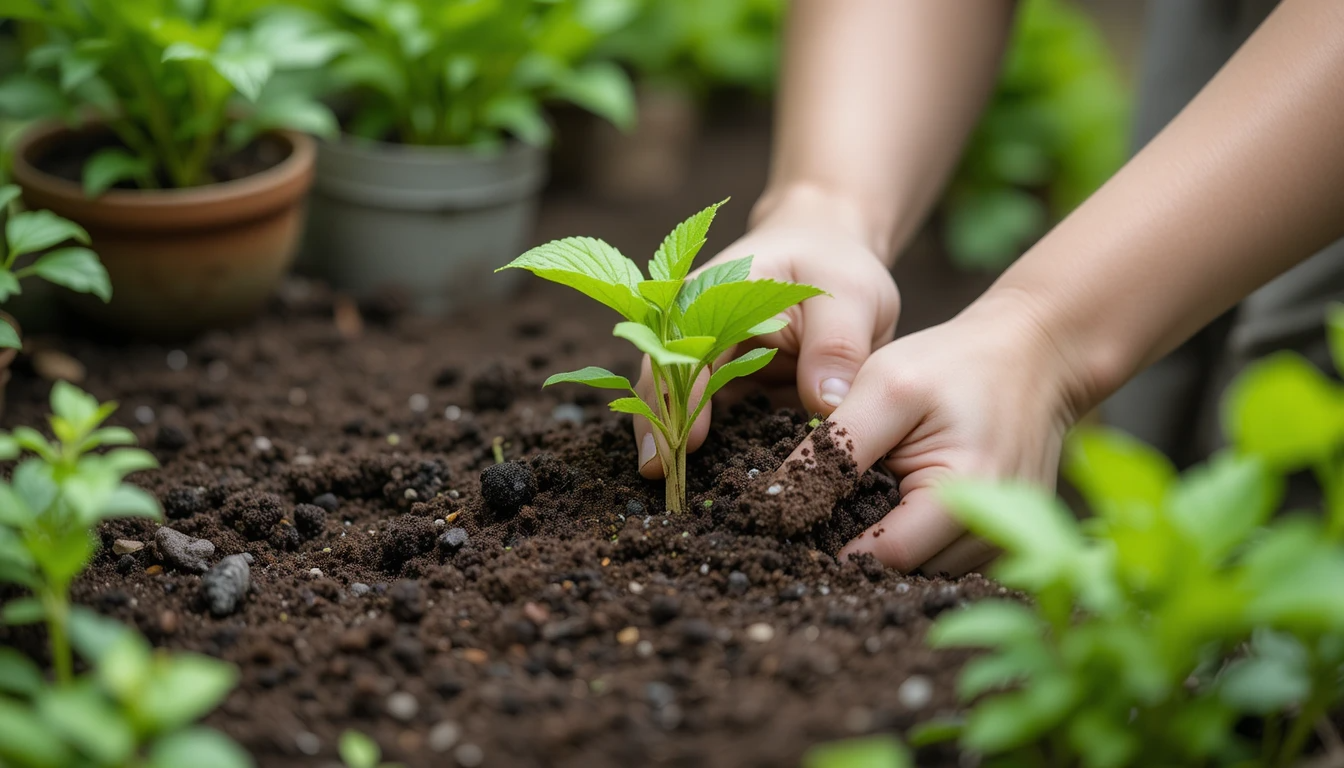
We are living in the short now. Our decisions are measured in quarterly reports, election cycles, and fleeting trends. But the land remembers in deeper time. It remembers the glaciers, the old-growth forests, the rhythms of bison herds. To garden regeneratively is to step out of the short now and into the Long Now—to begin thinking like a mountain, acting like a river, and planting like an ancestor. This is the practice of the Seventh Generation Garden, named for the Iroquois philosophy that our decisions should benefit those seven generations hence. This 3,800-word guide is not about gardening for a season, but for centuries. It is a manual for becoming a good ancestor, using the soil beneath your feet as your primary medium of legacy.
Book I: The Deep Time Mindset – Unlearning the Present
1. The Pathology of the Annual Mind
Modern gardening is overwhelmingly annual. We till, plant, harvest, and clear within a single year. This mindset mirrors our extractive economy: take, consume, discard. It treats soil as a substrate, not a heritage. The Seventh Generation Gardener makes a perceptual shift: from growing annual crops to cultivating perennial systems.
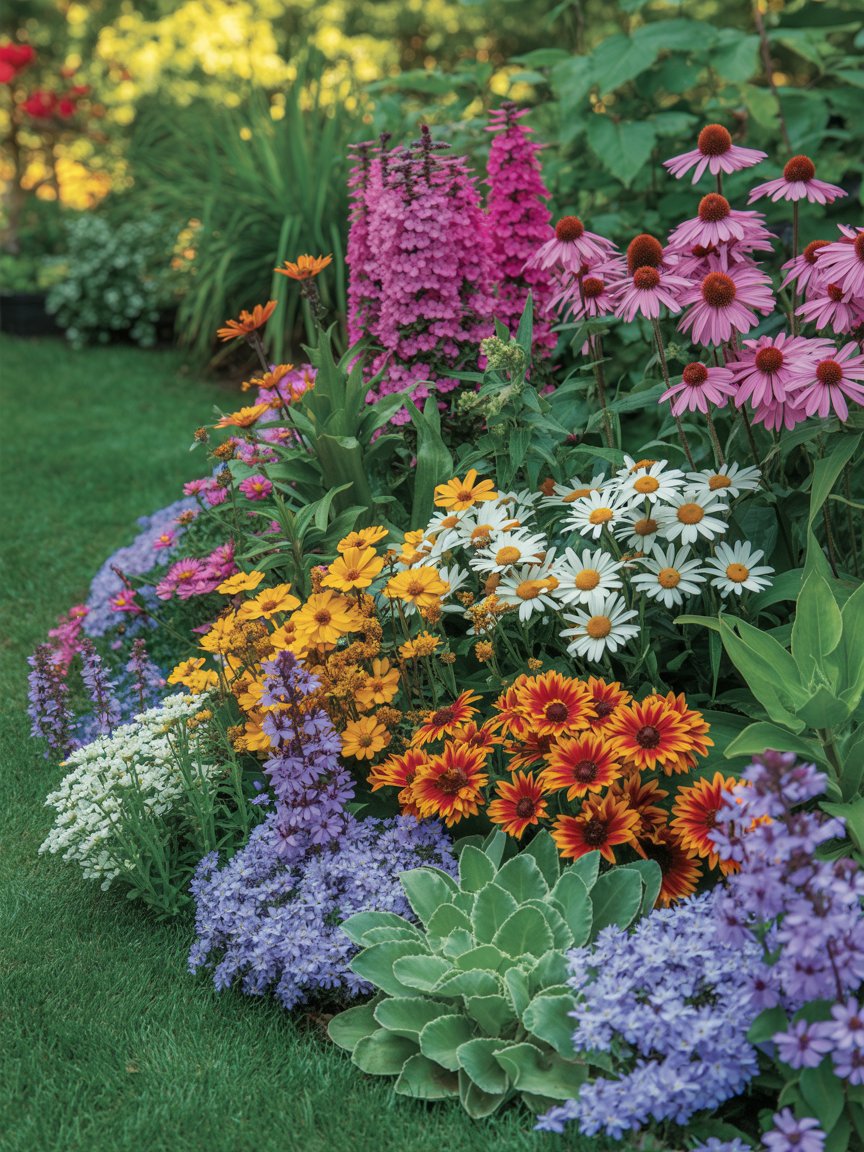
- From Extraction to Accretion: Annual farming extracts fertility (even with compost, it’s an annual removal). Perennial systems accrete—they build over time. A hazelnut shrub drops leaves for decades, its roots mine deep minerals, its canopy creates microclimates. It is a self-renewing fertility bank.
- Thinking in Canopy Layers: We don’t picture a flat bed of lettuce. We picture a vertical timeline: fast-growing nitrogen-fixing pioneer trees (alder, black locust) that will nurse slower-growing legacy oaks and chestnuts, which will one day shade understories of berry bushes and medicinal herbs. We are planting a future forest, not just a garden.
2. The Land as a Palimpsest
A palimpsest is an ancient manuscript scraped clean and written over, with the old text still faintly visible beneath. All land is a palimpsest. Our yards sit atop old farmland, wetland, or forest. The Seventh Generation Gardener learns to read the erased text.
- Ghost Imprints: Straight lines of old fence rows, depressions of filled-in ponds, subtle variations in vegetation hinting at past structures or soil types. These ghost imprints guide our design. We might restore a wet meadow where a pond once was, or plant a hedgerow where a fence line decayed.
- The Memory of the Soil: A soil test is a historical document. High phosphorus? This was likely a poultry farm or a home with an old septic tank. Low organic matter? This was likely row-cropped to exhaustion. We don’t just amend soil; we re-write its history with chapters of leaf mold, fungal networks, and animal rotations, aiming for a richer, more complex narrative.
Book II: The Pillars of the Legacy Landscape – Building for Centuries
3. The Soil Cathedral: Engineering the Underground Eternal
If we are building for seven generations, soil is our eternal architecture. We move beyond simple composting to geological-scale soil building.
Deep-Time Soil Strategies:
- Remineralization with Rock Dust: We are not just feeding plants for a season; we are replenishing the mineral bedrock lost to 10,000 years of glaciation and 200 years of intensive agriculture. Applying finely ground basalt, granite, or glacial gravel dust introduces a slow-release spectrum of 70+ trace minerals. This isn’t a fertilizer; it’s a geological intervention that will improve soil fertility and plant nutrition for decades.
- The Biochar Foundation: Biochar is not mere compost. When added to soil, it persists for 2,000 to 10,000 years. We create or source biochar, charge it with nutrients and microbes, and incorporate it into planting holes and beds. We are building a permanent, porous carbon infrastructure—a coral reef for soil life that will enhance water retention and nutrient cycling for millennia.
- Mycoremediation & Fungal Dominion: We actively inoculate our land with keystone fungi. We bury woody debris inoculated with native mushroom spawn (like oyster or king stropharia). As these fungi decompose the wood, they create vast, resilient mycelial networks that detoxify soils, suppress pathogens, and connect plants. We are not just growing mushrooms; we are installing a permanent, living soil neurological network.
4. The Hydrological Legacy: Designing for the 100-Year Storm
Water management must be designed for climate chaos—for both catastrophic drought and deluge.
Century-Proof Water Systems:
- The Keyline Spine: On larger properties, the Keyline Design system is the ultimate hydrological legacy. Using a subsoiler or plow, we make shallow cuts along the keyline (a specific topographic contour). This subtly redistributes water from valleys to ridges, hydrating entire landscapes and preventing erosion. It is a one-time intervention that improves land for generations.
- The Rainwater Cistern as heirloom: Beyond barrels, we install large, buried cisterns (5,000-10,000 gallons) plumbed to roof catchments. This isn’t for watering tomatoes; it’s a family heirloom of water security—for fire protection, for drinking water filtration during outages, for sustaining perennial systems through multi-year droughts.
- The Constructed Wetland as Living Kidney: We design a gravity-fed, greywater wetland that becomes a permanent landscape feature. Water from showers and sinks flows through a series of gravel beds planted with cattails, bulrushes, and water iris. This beautiful, low-maintenance system cleanses water, creates amphibian habitat, and provides irrigation—a self-maintaining utility passed to future owners.
5. The Arboreal Dynasty: Planting the Ultimate Heirloom
The most direct act of seventh-generation thinking is to plant trees whose maturity we will never see.
The Legacy Tree Portfolio:
- The Timber Monarchs: Plant a grove of long-lived, valuable timber trees (Black Walnut, White Oak, Cuban Mahogany in suitable climates). These are not for you. They are a living trust fund for your grandchildren’s grandchildren, with stewardship instructions written into your will.
- The Perennial Pantry: Plant low-maintenance, high-yield food trees that will bear for centuries: chestnuts (the “bread tree”), persimmons, mulberries, pecans, and heartnuts. A single chestnut tree can feed a family for a month. An allee of such trees is a permanent, edible infrastructure.
- The Keystone Habitat Trees: Prioritize native trees that are “ecological linchpins”. A single native oak supports over 500 species of caterpillars (vital bird food). A willow supports countless pollinators and stabilizes riverbanks. These trees are not just for beauty; they are biodiversity engines that will sustain local ecosystems for centuries.
Book III: The Social Legacy – Weaving the Garden into the Cultural Fabric
6. The Garden as a Deed-Restricted Commons
Legal tools can ensure a garden’s legacy survives a property sale. We can work with attorneys to create conservation easements or deed restrictions that mandate: no synthetic chemicals may ever be used, the food forest must be maintained, rainwater systems cannot be removed. The garden becomes a legally protected ecological trust.
7. The Oral History Project: Seeding Stories with Seeds
A legacy is made of stories as much as soil.
- The Annotated Seed Vault: We save seeds not just in packets, but in story-boxes. Each heirloom variety comes with a written or recorded story: “These ‘Grandma Nell’s’ beans were carried in her apron pocket from Sicily in 1912. They thrive in drought.” The seed and its narrative are bequeathed together.
- The Garden Journal as a Chronicle: We keep a journal not of just yields, but of observations, failures, and epiphanies. When did the first frog appear in the new pond? Which apple variety survived the late frost? This becomes a practical grimoire for future stewards, passing down hard-won, place-specific knowledge.
- The Skill-Bearing Tree: We graft. We take scion wood from an ancient, beloved apple tree in the neighborhood and graft it onto our rootstock. That tree becomes a living archive of taste and history. We teach grafting to our children and neighbors, ensuring the skill—and the tree—propagates.
8. The Neighborhood Mycelial Network
No garden is an island. Its legacy depends on a resilient social ecosystem.
- The Pollinator Pathway Pact: We organize neighbors to create contiguous corridors of native habitat—each yard a link in a chain. We create a shared map and plant list, turning individual gardens into a collective biological corridor that will outlive any single homeowner.
- The Heirloom Tool Library: We pool resources to buy and maintain century-quality tools (scythes, broadforks, cider presses) housed in a communal shed. The tools, and the shared responsibility for them, build community and ensure access to non-fossil-fuel technology for generations.
Book IV: The Interior Legacy – Cultivating the Ancestral Self
9. The Cultivation of Post-Heroic Patience
Our culture celebrates the heroic, quick fix. The Seventh Generation Garden cultivates post-heroic patience—the quiet, unglamorous work of mulching, observing, pruning, and waiting. It teaches that the most important work is often invisible and slow: the mycelium spreading, the carbon sequestering, the taproot delving deep. This patience is an antidote to existential anxiety; it grounds us in slow, meaningful process.
10. Embracing the Elegy and the Anthem
To plant for the deep future is to hold two truths: elegy for the world that is dying (the stable climate, the lost species) and anthem for the world we are helping birth (the restored soil, the returning birds). The garden is where we learn to sing both songs at once, where grief for the loss of monarchs fuels the action of planting more milkweed. This emotional complexity is a form of maturity the short now cannot provide.
11. The Privilege of Stewardship Interruption
We must internalize that we are not the owners of this legacy, merely its current stewards-in-turn. Our grandest vision will be pruned, edited, and reinterpreted by those who follow. A future gardener may cut down our prized chestnut to make way for a meditation glade. This is not failure; it is the succession of care. Our job is not to create a frozen museum, but to establish such fertile, resilient conditions that the land can thrive through countless future human iterations.
Coda: The First Stone in the Wall
Building a Seventh Generation Garden is like building a dry-stone wall. You are not building the whole wall. You are placing one perfect stone. The next steward will place another, and another, across generations. The wall will curve, adapt, and endure.
Your stone may be:
- The planting of a single white oak.
- The installation of a swale that will hydrate the land for centuries.
- The creation of a neighborhood seed library.
- The legal protection of your soil from chemicals in perpetuity.
- The simple, daily practice of feeding the compost pile, the humble hearth of renewal.
Do not be overwhelmed by the 200-year vision. Be faithful to the seven-generation intention. Start with one stone. Place it well. Inscribe it with care. And trust that you are initiating a conversation with the future—a conversation written not in words, but in root depth, canopy shade, and the rich, dark, living language of the soil you leave behind.