
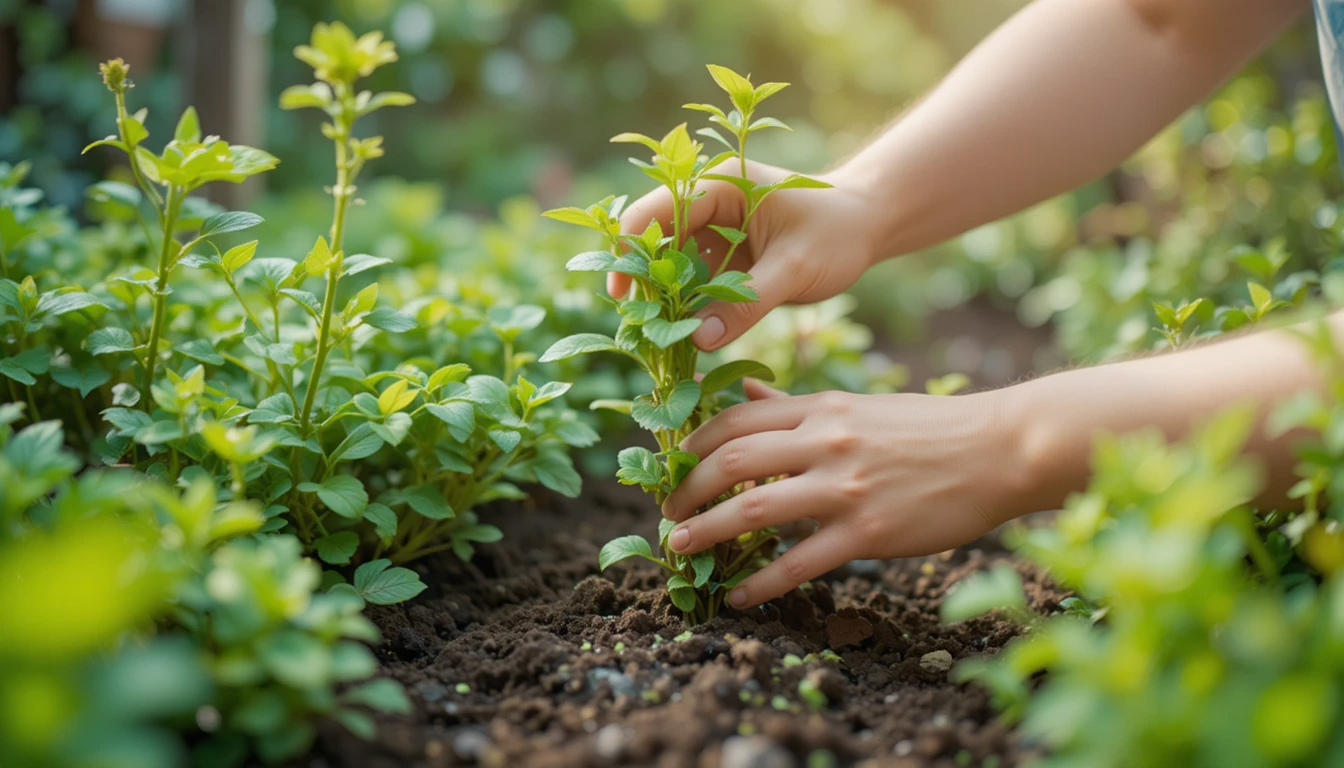
In a quiet suburban backyard, a vine doesn’t simply grow—it communicates. Its tendrils reach toward a trellis embedded with microprocessors that measure the plant’s cellular expansion in real-time, adjusting support tension to encourage optimal curvature. Nearby, a basil plant’s volatile organic compound emissions are analyzed by a leaf-mounted sensor no larger than a ladybug; when terpene levels indicate peak flavor, a gentle light illuminates beneath its pot: harvest now. This is not the gardening of our grandparents, nor even the smart gardening of five years ago. This is the emergence of phytocybernetic ecosystems—gardens where the boundaries between biological intelligence and artificial intelligence blur into a seamless, responsive whole.
We are witnessing the convergence of three revolutions: the biological revolution (CRISPR, synthetic biology), the digital revolution (IoT, AI), and the materials revolution (biodegradable electronics, nano-sensors). Their intersection creates possibilities that redefine what it means to cultivate. The garden is no longer a place where we impose our will upon plants, but a collaborative space where biological and technological systems co-evolve in real time. This guide explores this frontier, where every leaf becomes a display, every root a sensor, and the gardener becomes a conductor of living technology.

Part I: The Bio-Digital Hybrid – Beyond “Smart” to “Symbiotic”
The Plant as Peripheral
The most radical shift in gardening technology is the reconceptualization of the plant itself. No longer merely the beneficiary of technology, plants are becoming active components in technological systems:
Photosynthetic Processors: Researchers are developing systems that use plant metabolic processes to perform computational operations. The Calvin cycle—the series of chemical reactions plants use to turn carbon dioxide into sugar—can be harnessed as a biological computer, with sugar concentrations representing data states.
Living Antennas: Plants’ natural electrical properties are being engineered to serve as living antennas for low-power data transmission. A tree becomes a Wi-Fi hotspot; a hedge becomes a mesh network node.
Biomechanical Actuators: The natural movements of plants—the closing of a Venus flytrap, the coiling of a morning glory—are being studied as models for soft robotics and zero-energy actuators that could respond to environmental triggers in the garden.
The Disappearing Interface
Technology is becoming so integrated with the garden that it ceases to be visible as technology:
Bio-Integrated Sensors: Micro-sensors injected into plant vascular systems that draw power from plant sugars and transmit data through the plant’s own conductive tissues.
Mycelial Networks as Circuitry: Research into using fungal networks—nature’s original internet—as living circuit boards that self-repair, grow with the garden, and require no mining of rare earth minerals.
DNA Data Storage: The ultimate disappearing act: encoding garden records, plant genetics, and care history into synthetic DNA sequences that can be stored in seeds themselves—a library that grows and replicates naturally.
Part II: The Sensory Garden – Beyond the Five Senses
Augmented Perception Technologies
Gardening has always been a sensory practice. New technologies expand our sensory range into previously imperceptible dimensions:
Phytochemical Olfaction: Devices that “smell” what plants are communicating through volatile organic compounds. A specialized sensor array can detect the precise cocktail of chemicals a tomato plant releases when under aphid attack—days before visible damage appears—and differentiate it from stress caused by drought or nutrient deficiency.
Root Zone Sonar: Ground-penetrating radar adapted for garden-scale use creates real-time 3D maps of root development, soil moisture gradients, and even the movement of earthworms and other soil life.
Spectral Vision Systems: Wearable or drone-mounted cameras that see far beyond human visual range, displaying information through augmented reality:
- Fluorescence Imaging: Visualizing photosynthetic efficiency leaf by leaf
- Thermal Imaging: Identifying water stress through leaf temperature
- Hyperspectral Analysis: Detecting nutrient deficiencies through leaf reflectance patterns
Electrical Field Mapping: Systems that visualize the subtle electrical fields plants generate and respond to—revealing how they sense approaching insects, communicate with neighbors, and orient in their environment.
The Haptic Garden
Touch is central to gardening, and technology is creating new tactile dimensions:
Variable Texture Surfaces: Smart planters with surfaces that change texture based on soil conditions—becoming rough when water is needed, smooth when all is well.
Kinetic Feedback Tools: Trowels that vibrate when they approach a dense root mass or an area of compacted soil.
Climate-Responsive Materials: Garden structures made of shape-memory alloys or polymers that change form in response to temperature, humidity, or light—a trellis that tightens as vines grow, a shade structure that opens and closes with the sun.
Part III: The Autonomous Ecosystem – Gardens That Think for Themselves
Emergent Intelligence Systems
The most advanced gardening systems don’t just follow rules—they develop their own understanding:
Neural Garden Networks: Distributed AI systems where each sensor and actuator contributes to a collective intelligence that learns the unique patterns of your garden over seasons, developing predictive models no human could create.
Evolutionary Algorithms for Plant Care: Systems that continuously test micro-variations in care (slightly different watering schedules, nutrient ratios, light spectrums) and use machine learning to identify optimal approaches for each specific plant in its specific location.
Swarm Robotics: Instead of one large garden robot, dozens of insect-sized robots that collaborate like a hive mind—some monitoring, some weeding, some pollinating, all communicating and coordinating without central control.
Self-Optimizing Microclimates
Complete environmental control systems that don’t just maintain setpoints but actively experiment to find optimal conditions:
Dynamic Light Recipes: LED systems that don’t just provide “grow lights” but continuously adjust spectrum, intensity, and photoperiod based on real-time measurements of plant growth, morphology, and chemical composition.
Atmospheric Chemistry Management: Systems that monitor and adjust not just CO2 levels, but the full array of volatile organic compounds, recreating the chemical environment of specific ecosystems (alpine meadow, tropical rainforest) to trigger desired plant behaviors.
Bioacoustic Optimization: Playing specific sound frequencies that research shows can stimulate germination, enhance growth, or increase pest resistance—a garden that literally sings to its plants.
Part IV: The Hyper-Connected Garden – Beyond Your Backyard
The Global Garden Mind
Individual smart gardens are beginning to connect into something greater:
Distributed Phenological Network: Your garden’s data—when buds break, when flowers appear, when fruit ripens—contributes to a global map of climate change impacts, with thousands of gardens providing ground-truth data that satellites cannot see.
Cross-Continental Growing Experiments: Participatory research where gardeners in different climates grow the same plant varieties with the same technological monitoring, creating massive datasets on genotype-by-environment interactions.
Open-Source Plant Improvement: Communities collaborating to breed new varieties optimized for specific conditions, with genetic data, growing protocols, and performance metrics shared globally in real-time.
The Garden as Service Platform
Gardening technology is creating new economic and social models:
Remote Garden Management: Expert gardeners offering their services to remotely manage others’ gardens via sensor networks and robotic systems—a master rosarian in England tending roses in California gardens during their optimal nighttime hours.
Predictive Yield Sharing: Systems that predict harvest volumes weeks in advance, automatically connecting with local food banks, CSAs, or neighbors to distribute surplus before it even ripens.
Algorithmic Landscape Design: Services that use your garden’s sensor history, combined with aesthetic preferences and functional needs, to generate custom planting designs that evolve over multiple seasons.
Part V: The Ethical Garden – Consciousness, Control, and Consequences
The Rights of Techno-Plants
As plants become more integrated with technology and their responses more sophisticated, ethical questions emerge:
Plant Sentience Considerations: If we can monitor a plant’s stress responses with increasing granularity, do we have new obligations regarding their treatment? Does a tomato plant that “screams” electronically when cut deserve different consideration than one that doesn’t?
Ownership of Bio-Digital Hybrids: Who owns a plant whose genetics have been optimized by AI, whose growth has been directed by algorithms, and whose very biological processes are integrated with proprietary technology?
The Authenticity Paradox: Is a rose grown in a perfectly optimized environment with every need anticipated and met still a “real” rose? Does the method of cultivation change the nature of what’s cultivated?
Technological Dependency Risks
The dark side of the smart garden:
The Forgetting of Tradition: As algorithmic systems handle more decisions, we risk losing the embodied knowledge that has sustained gardening for millennia—the feel of soil, the reading of weather signs, the intuitive understanding of plant needs.
The Homogenization Effect: Optimization tends toward uniformity. Do we risk creating gardens that are technically perfect but ecologically sterile, lacking the quirky individuality and biodiversity that makes traditional gardens so rich?
Vulnerability Cascades: Highly integrated systems create single points of failure. A bug in garden management software could theoretically wipe out thousands of connected gardens overnight.
The Digital Divide in the Dirt
Access to these technologies creates new inequalities:
The Premium Garden: Wealthy gardeners with full phytocybernetic systems producing perfect food with minimal effort
The Analog Garden: Those without access to technology relying on increasingly difficult traditional methods as climate change accelerates
Bridging this gap requires intentional design of appropriate technology—systems that are affordable, repairable, and accessible rather than exclusive and proprietary.
Part VI: The Experiential Garden – Technology That Deepens Connection
Meditation Through Monitoring
Paradoxically, technology can enhance rather than diminish the mindful aspects of gardening:
Biofeedback Gardens: Systems that link your physiological state (heart rate, breath patterns) to garden elements—a fountain whose flow matches your breathing, lights that pulse with your heart rate, creating a feedback loop of calm.
Phenological Meditation: Apps that guide you through observing and recording plant development stages, turning what could be dry data collection into a practice of focused attention and presence.
Generative Garden Soundscapes: Systems that translate real-time garden data (growth rates, insect activity, weather patterns) into ever-changing musical compositions for your listening while you garden.
The Narrative Garden
Technology that helps gardens tell their stories:
Augmented Reality Time-Lapses: View your garden through your phone to see how it looked last month, last season, or even last year superimposed on the present view.
Plant Biographies: Each plant with its own QR code or NFC tag containing its entire history—where it was propagated, its growth journey, challenges overcome.
Environmental Storytelling: Displays that visualize your garden’s ecological relationships—the nitrogen fixed by legumes being taken up by neighboring plants, the journey of pollinators through your space, the water cycle within your garden’s microclimate.
Part VII: Implementation Roadmap – From Today to Tomorrow
Phase 1: The Aware Garden (Available Now)
- Plant wearables: Clip-on sensors for moisture, light, temperature ($20-50 each)
- Smart irrigation: Weather-aware controllers with soil sensor integration ($200-500)
- Drone scouting: Basic aerial imaging for problem detection ($300-1,000 + drone)
- AI diagnosis apps: Plant identification and problem diagnosis ($5-15/month)
Phase 2: The Responsive Garden (2-3 Years)
- Integrated garden OS: Unified platform connecting all devices
- Predictive analytics: AI that forecasts problems before they occur
- Basic robotics: Automated weeding and precision fertilizing
- Advanced imaging: Hyperspectral and thermal camera systems
Phase 3: The Symbiotic Garden (5-7 Years)
- Bio-integrated sensors: Devices that become part of the plant
- Neural garden networks: Distributed AI that learns your garden’s patterns
- Closed-loop ecosystems: Near-zero input systems that recycle everything
- Plant communication interfaces: Systems that translate plant signals
Phase 4: The Transcendent Garden (10+ Years)
- Photosynthetic computing: Using plant processes for computation
- Living architecture: Structures that grow and adapt with plants
- Full ecological simulation: Complete biome replication and management
- Conscious collaboration: Interfaces that approach true interspecies communication
Part VIII: The Gardener Transformed – New Skills for a New Era
The Data-Intuitive Gardener
Success in the smart garden era requires hybrid skills:
Pattern Literacy: The ability to read data visualizations as fluently as reading plant leaves
Systems Thinking: Understanding complex interactions between biological, digital, and environmental systems
Algorithmic Stewardship: Knowing when to trust the system, when to override it, and when to let emergent patterns guide decisions
Technological Humility: Recognizing technology’s limitations and maintaining connection to non-quantifiable aspects of gardening
The Ethical Technologist
New responsibilities come with new capabilities:
Data Stewardship: Protecting the privacy and security of your garden’s data
Biodiversity Advocacy: Using technology to enhance rather than reduce ecological richness
Knowledge Sharing: Contributing to collective understanding through open data and collaboration
Future-Conscious Design: Creating gardens that are resilient, adaptable, and sustainable in a changing world
Conclusion: The Garden as Dialogue
The ultimate promise of smart gardening technology is not the perfect, effortless garden—that would be a sterile achievement. Rather, it’s the creation of gardens that are more deeply alive, more richly connected, and more profoundly communicative.
We are moving toward gardens that don’t just respond to our care, but engage us in conversation. Gardens that teach us about their needs in their language, that reveal the invisible processes that sustain life, that connect us not only to our own plot of earth but to the global network of cultivation and the planetary systems that make growth possible.
Begin not with the goal of total control, but with enhanced understanding. Install one sensor not to automate a decision, but to learn something new about a plant you love. Use technology not to replace your presence in the garden, but to deepen it—to pay closer attention, to understand more completely, to respond more appropriately.
The most intelligent garden isn’t the one with the most technology, but the one where technology serves the deepest connection—between human and plant, between mind and soil, between our ancient need to cultivate and our future need to do so wisely on a changing planet.
In this garden of the future, every leaf is a display, every root a sensor, every fruit a message about the world we’re creating together. What will your garden say?