
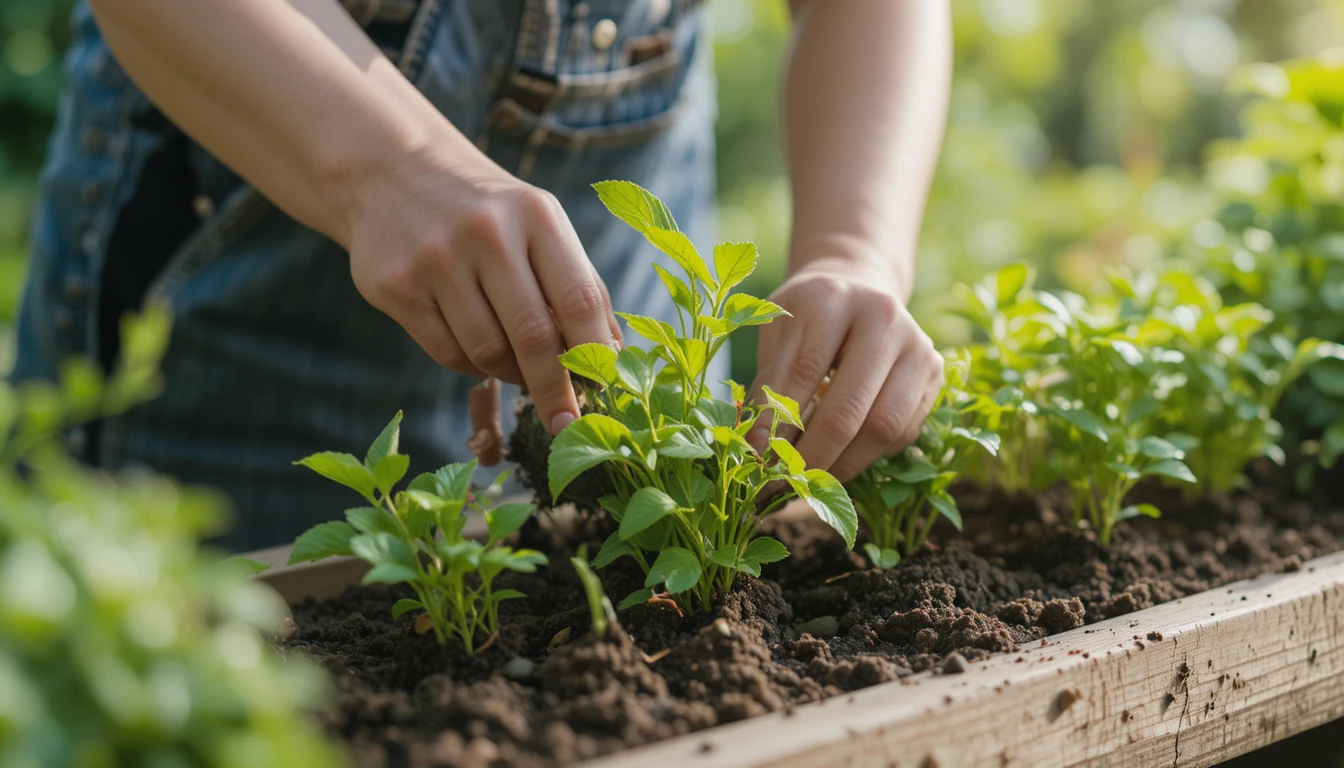
While you admire the leaves, flowers, and stems of your plants, an entire universe thrives in darkness. In every pot, planter, and garden bed lies a complex civilization—fungal networks like internet cables, bacteria cities, microscopic predators and prey, and roots that don’t just absorb water but think, communicate, and make decisions. This is the secret life of soil—the most overlooked, misunderstood, and miraculous aspect of gardening. Welcome to the underground.
Chapter 1: Soil is Not Dirt
1.1 The Living Matrix
What You’re Actually Working With:


The Three-Phase System:
- Solid (45%): Minerals (sand, silt, clay), organic matter
- Liquid (25%): Water with dissolved nutrients
- Gas (25%): Air spaces (oxygen crucial for roots!)
- Living (5%): This is where the magic happens
The Living Fraction Breakdown:
- Bacteria: 1 billion per teaspoon (the workforce)
- Fungi: Several miles of hyphae per teaspoon (the internet)
- Protozoa: 10,000 per teaspoon (the grazers)
- Nematodes: 50-100 per teaspoon (the recyclers)
- Microarthropods: Springtails, mites (the tillers)
1.2 The Soil Food Web Pyramid
Who Eats Whom Underground:
Level 1: Primary Producers
- Plant roots (exuding sugars)
- Dead organic matter
Level 2: Primary Consumers
- Bacteria (eat simple sugars)
- Fungi (eat complex carbohydrates)
Level 3: Secondary Consumers
- Protozoa (eat bacteria)
- Nematodes (eat bacteria, fungi, other nematodes)
Level 4: Tertiary Consumers
- Microarthropods (eat everything smaller)
- Earthworms (the ecosystem engineers)
The Nutrient Cycling Miracle:
- Roots exude sugars (up to 40% of photosynthesis!)
- Bacteria/fungi eat sugars, immobilize nutrients
- Protozoa/nematodes eat bacteria/fungi
- They excrete plant-available nutrients RIGHT at roots
- Plants get fed exactly what they need, when needed
1.3 Soil Personalities
Identifying Your Soil’s Character:
Sandy Soils:
- Personality: The social butterfly
- Drains quickly, airy
- Low nutrient holding
- Microbes: Bacterial-dominated
- Feels like: Beach sand
Clay Soils:
- Personality: The introvert
- Holds water/nutrients tightly
- Poor drainage, compacts easily
- Microbes: Fungal-dominated
- Feels like: Pottery clay when wet
Loamy Soils:
- Personality: The balanced friend
- Ideal mix of sand/silt/clay
- Good drainage + nutrient holding
- Microbes: Balanced bacteria/fungi
- Feels like: Crumbled chocolate cake
Chapter 2: The Root Revolution
2.1 Roots Are Not Just Straws
The Intelligent Underground Organ:
Root Cap: The Brain
- Contains statocytes (gravity sensors)
- Produces mucigel (lubricant + microbial food)
- Secretes chemicals to dissolve minerals
Root Hairs: The Intestines
- 1,000x surface area increase
- Where most water/nutrient absorption happens
- Live only 1-2 weeks, constantly replaced
Root Architecture Decisions:
- Taproot vs. fibrous: Genetic programming + environment
- Root angle: Responds to gravity, water, obstacles
- Branching patterns: Maximize exploration efficiency
2.2 Root Exudates: The Underground Economy
Plants Pay for Services:
What Roots Secrete:
- Sugars (40% of photosynthates!): Payment for microbes
- Amino acids: Microbial food
- Organic acids: Mine minerals from rocks
- Enzymes: Break down complex molecules
- Signal compounds: Call specific microbes
The Rhizosphere Effect:
- Soil within 1mm of root is COMPLETELY different
- Microbial populations 10-100x higher
- pH different by 1-2 units
- Nutrient concentrations radically different
2.3 Root Communication
The Chemical Conversations:
Plant-to-Plant Warnings:
- Example: When aphids attack, plant releases methyl jasmonate
- Neighboring plants “smell” this and upregulate defenses
- Even different species understand the warning
Root Recognition:
- Plants can distinguish self-roots vs. other-roots
- Some cooperate, some compete more aggressively
- Siblings (same mother plant) cooperate more than strangers
Chapter 3: The Mycorrhizal Internet
3.1 The Wood Wide Web
Nature’s Social Media:
How It Works:
- Fungal hyphae connect plant roots
- Transfer nutrients, water, information
- Mycorrhiza means “fungus-root” (symbiotic partnership)
The Exchange Rate:
- Plant gives: Sugars (up to 30% of production!)
- Fungus gives: Water, phosphorus, nitrogen, other nutrients
- Hyphal network: Can explore 100x more soil volume than roots alone
3.2 Types of Mycorrhizae
Choosing Your Network:
Arbuscular Mycorrhizal Fungi (AMF):
- Partners with: 80% of plants (most vegetables, flowers)
- Connection: Inside root cells (arbuscules)
- Benefits: Phosphorus delivery, drought resistance
- Add to: Most garden plants
Ectomycorrhizal Fungi (EMF):
- Partners with: Trees (oak, pine, birch)
- Connection: Around root cells (sheath)
- Benefits: Nitrogen delivery, disease protection
- Add to: Trees, shrubs
3.3 Cultivating Your Fungal Network
From Sterile to Symbiotic:
Inoculation Methods:
- Commercial inoculants: Spore powders (quality varies wildly)
- Native soil transfer: From healthy woodland (best diversity)
- Living mulch: Plants that host specific fungi
- Avoid: Chemical fertilizers, fungicides, deep tilling
Signs of Healthy Fungal Networks:
- White hyphae visible in soil
- “Earthiness” smell
- Water stable aggregates (soil holds shape when wet)
- Plants drought-resistant beyond expectation
Chapter 4: The Soil Microbiome Orchestra
4.1 Bacterial Communities
The Chemical Wizards:
Nitrogen Fixers:
- Rhizobia: Legume partners (beans, peas)
- Frankia: Non-legume partners (alder, bayberry)
- Free-living: Azotobacter, Cyanobacteria
Phosphorus Solubilizers:
- Bacillus, Pseudomonas: Unlock rock phosphate
- Secrete organic acids that dissolve minerals
Disease Suppressors:
- Trichoderma: Fungal parasite, plant growth promoter
- Bacillus subtilis: Produces antibiotics
4.2 The Predator Guild
Keeping Populations Balanced:
Protozoa:
- Amoebae, Flagellates, Ciliates
- Eat 10,000 bacteria daily each
- Release nitrogen as waste (plant food)
Nematodes:
- Bacterial-feeders: Good! Release nutrients
- Fungal-feeders: Good! Release nutrients
- Root-feeders: Bad! Plant parasites
- Predatory: Eat other nematodes
4.3 The Engineers
Changing the Physical Environment:
Earthworms:
- Anecic: Deep burrowers (nightcrawlers)
- Endogeic: Horizontal burrowers in topsoil
- Epigeic: Surface dwellers (compost worms)
- Benefits: Aeration, nutrient mixing, casting fertility
Springtails & Mites:
- Shred organic matter
- Disperse microbes
- Create soil structure
Chapter 5: Reading Soil Health Without Labs
5.1 The Hand Test
Simple Field Assessment:
Texture by Feel:
- Moisten soil to putty consistency
- Try to form a ribbon between thumb and finger
- No ribbon (sandy): Falls apart immediately
- Short ribbon (loamy): Breaks at 1-2 inches
- Long ribbon (clayey): Extends beyond 2 inches
Smell Test:
- Healthy: Earthy, pleasant (geosmin – same as rain smell)
- Unhealthy: Sour, rotten eggs (anaerobic)
- Sterile: No smell (dead soil)
5.2 The Slake Test
Measuring Soil Structure:
Procedure:
- Take dry soil aggregates (about 1 inch)
- Gently place in glass of water
- Observe over 5 minutes
Interpretation:
- Immediate disintegration: Poor structure, low organic matter
- Holds shape briefly: Moderate structure
- Stays intact: Excellent structure, fungal networks present
5.3 The Infiltration Test
Water Movement Intelligence:
How To:
- Remove both ends of a coffee can
- Press 2 inches into soil
- Fill with water, time disappearance
- Repeat for saturated rate
What It Tells You:
- Fast (>2 inches/hour): Sandy, well-aerated, may drought quickly
- Moderate (0.5-2 inches/hour): Ideal
- Slow (<0.5 inches/hour): Compacted, poor drainage
Chapter 6: Cultivating Underground Civilization
6.1 Feeding the Microbes
Not Plants, But Their Helpers:
Carbon-to-Nitrogen Ratios:
- Microbes eat carbon, need nitrogen to build bodies
- Ideal C:N = 24:1 (that’s what they excrete!)
- High C (straw, wood chips): Tie up nitrogen temporarily
- Low C (manure, grass clippings): Release nitrogen quickly
The Microbe Buffet:
- Bacterial foods: Simple sugars (molasses, fruit waste)
- Fungal foods: Complex carbs (wood chips, cardboard)
- Balanced diet: Compost, diverse plant residues
6.2 The No-Till Revelation
Why Disturbance Destroys:
Tillage Effects:
- Shreds fungal networks (hyphae are delicate)
- Burns up organic matter (oxygen influx)
- Destroys soil structure (collapses pores)
- Kills earthworms and other engineers
No-Till Alternatives:
- Sheet mulching: Lasagna gardening
- Broadforking: Aerates without inversion
- Cover cropping: Living tillage (roots create pores)
6.3 Creating Soil Depth
From Shallow to Deep:
Strategies for Building Soil:
- Hugelkultur: Buried wood as sponge and nutrient bank
- Deep mulching: Annual additions build topsoil
- Diversity planting: Different root depths explore different layers
- Biological drilling: Daikon radish, alfalfa penetrate hardpan
Chapter 7: The Compost Microcosm
7.1 Compost as Microbial Inoculation Factory
Not Just Decomposition—Cultivation:
Thermophilic Phase (Hot Compost):
- Temperature: 130-160°F
- Microbes: Thermophilic bacteria, actinomycetes
- Benefits: Kills pathogens, weeds
- Timeline: Days to weeks
Mesophilic Phase (Curing):
- Temperature: 70-110°F
- Microbes: Fungi, mesophilic bacteria
- Benefits: Diversity develops
- Timeline: Weeks to months
7.2 Compost Tea vs. Extract
Liquid Gold Differences:
Compost Tea (Aerated):
- Process: Compost + water + aeration + food source (24-48 hours)
- Result: Billions of ACTIVE microbes
- Use: Soil drench, foliar spray (within 4 hours)
- Purpose: Inoculate with living microbes
Compost Extract (Non-aerated):
- Process: Compost in water (stir, strain)
- Result: Soluble nutrients, some microbes
- Use: Soil drench only
- Purpose: Provide nutrients
7.3 Vermicompost: The Worm’s Gift
Different Microbial Profile:
Worm Castings:
- Higher bacterial diversity than regular compost
- Plant growth hormones (auxins, cytokinins)
- Pathogen suppression compounds
- Water-soluble nutrients readily available
Vermicompost Tea:
- Even more potent than compost tea
- Contains worm mucous (beneficial compounds)
- Excellent for seed starting, transplants
Chapter 8: Troubleshooting Underground
8.1 Diagnosing Soil Imbalances
Reading the Signs:
Bacterial vs. Fungal Imbalance:
- Too bacterial: Annual weeds dominate, quick decomp
- Too fungal: Acidic conditions, compaction, slow growth
- Balanced: Mixed weeds, good structure, healthy plants
Nutrient Cycling Issues:
- Tied-up nitrogen: Yellow plants despite fertilization
- Phosphorus deficiency: Purple leaves, poor flowering
- Micronutrient issues: Various leaf discolorations
8.2 Remediation Strategies
Healing Sick Soil:
For Compacted Soil:
- Plant daikon radish (biores tiller)
- Apply compost tea with fungal foods
- Mulch with wood chips (fungal promotion)
For Sterile Soil (Post-construction, etc.):
- Inoculate with native soil from healthy area
- Plant diverse cover crops
- Add compost, not just fertilizers
For Chemical-Loaded Soil:
- Plant sunflowers (phytoextraction)
- Add biochar (binds contaminants)
- Microbial inoculants to degrade chemicals
8.3 The Soil Restoration Timeline
Patience Required:
Month 1-3: Microbial Establishment
- Add diverse organic matter
- Inoculate with compost/compost tea
- Plant cover crops
Month 4-6: Structure Development
- Earthworms appear
- Water infiltration improves
- Plant growth visibly better
Year 2: Ecosystem Maturity
- Fungal networks visible
- Drought resistance noticeable
- Pest/disease suppression evident
Chapter 9: Urban Soil Challenges & Solutions
9.1 Contaminated Urban Soils
Healing the Wounds:
Common Contaminants:
- Lead: Old paint, gasoline
- PAHs: Tar, asphalt
- Heavy metals: Industry, traffic
- Salt: Road de-icing
Safe Urban Gardening Protocols:
- Test soil (extension services often free)
- Raised beds with clean soil if contaminated
- Phytoremediation plants if mild contamination
- Wash produce thoroughly
- Peel root crops if grown in questionable soil
9.2 Container Soil Ecology
Creating Mini-Ecosystems in Pots:
Challenges:
- Limited volume
- Temperature fluctuations
- Drying/rewetting cycles
- Nutrient leaching
Solutions:
- Add biochar (stable carbon, microbial housing)
- Use compost not just potting mix
- Mycorrhizal inoculation especially important
- Mulch surfaces to moderate temperatures
- Group pots to create microclimate
9.3 Rooftop & Balcony Specifics
Extreme Environments:
Wind Effects:
- Dries soil quickly
- Blows away mulch
- Solutions: Windbreaks, heavier mulches, more frequent monitoring
Weight Limitations:
- Wet soil is HEAVY
- Solutions: Lightweight mixes (add perlite, coir), smaller containers, distribute weight
Chapter 10: The Soil Steward’s Practice
10.1 Daily Underground Awareness
Changing Your Perspective:
The Morning Soil Check:
- Feel soil temperature
- Check moisture at different depths
- Observe surface life (worms, insects)
- Smell the soil after watering
Seasonal Soil Observations:
- Spring: Warming, waking life
- Summer: Microbial peak activity
- Fall: Preparation for winter
- Winter: Protected life waiting
10.2 The Soil Journal
Documenting the Invisible:
What to Record:
- Planting/harvest dates
- Soil amendments added
- Rainfall/irrigation amounts
- Plant health observations
- Soil tests (annual)
Pattern Recognition:
- Connect soil management to plant health
- Learn your soil’s specific personality
- Track improvements over years
10.3 The Ethical Soil Relationship
Principles for Partnership:
- Feed the soil, not just the plants
- Diversity above ground = diversity below ground
- Minimize disturbance (physical, chemical)
- Keep soil covered (mulch, plants)
- Observe and respond rather than impose
Conclusion: Becoming Grounded
Understanding soil changes everything. That pot on your windowsill transforms from a container of “dirt” holding a plant to a thriving ecosystem partnering with your plant. That garden bed becomes not just a place you grow food, but a living community you nurture and learn from.
The most profound gardening realization isn’t about perfect pruning or precise fertilizing. It’s this: You’re not growing plants. You’re cultivating soil. The plants are just the visible expression of soil health.
When you begin to see the white threads of mycelium as internet cables, the earthworm castings as nutrient-rich apartments, the soil smell after rain as microbial perfume—you become a different kind of gardener. One who works with life rather than against it. One who understands that the solutions to most plant problems lie not in bottles from the garden center, but in nurturing the invisible life beneath.
Your soil practice begins today: Take a handful of soil from somewhere you care for. Look closely. Smell it. Feel it. Ask yourself: Is this alive or just dirt? Then commit to making it more alive. Add compost. Plant diversity. Minimize disturbance. Observe changes.
The underground kingdom awaits your attention. It’s been waiting all along. And it holds the secrets to everything you want to grow above ground.
Share your soil discoveries with #SecretLifeOfSoil. Document the journey from dirt to living earth. We’re learning to see the invisible world together.