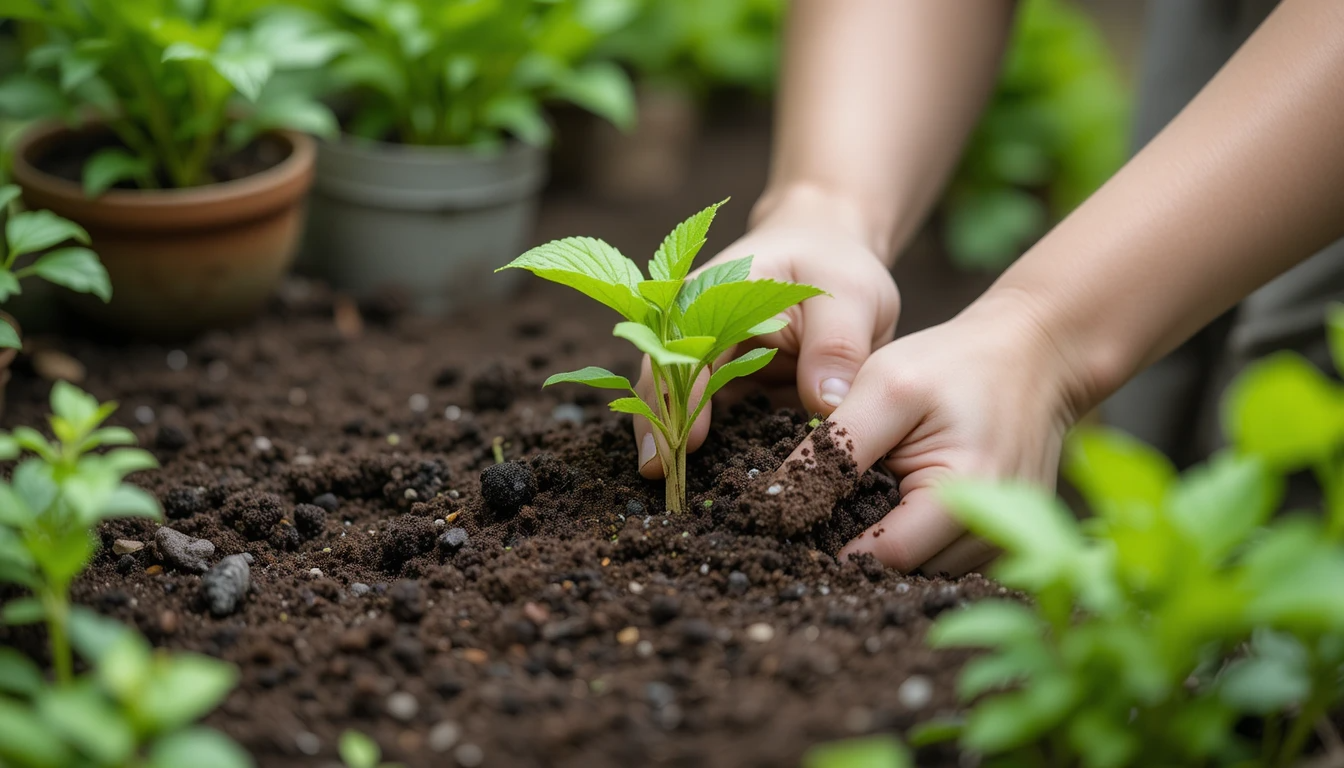
We have long been enchanted by the garden’s aerial ballet—the unfurling leaf, the triumphant bloom, the bending stem. Yet, the true revolution, the fundamental transformation of our relationship with land, is happening in the dark. It is subterranean, silent, and radically connective. This is the Rhizosphere Revolution: a paradigm shift that moves our focus from the individual plant in the sun to the living network in the soil. To garden mycelially is to understand that health, resilience, and intelligence do not reside in singular organisms, but in the relationships between them. This 4,200-word manifesto is an invitation to descend from the throne of the master gardener and take up the spade of the network weaver, to cultivate not just crops, but connections.
Part I: The Mycelial Mind – Thinking in Networks
1. From the Cathedral to the Web: A New Architectural Model
The industrial model of gardening is cathedral thinking: a top-down hierarchy. The gardener (the architect/priest) designs a structure (the garden), comprised of individual components (plants, tools), which are managed through doctrine (schedules, chemicals). It is linear, controlled, and fragile.
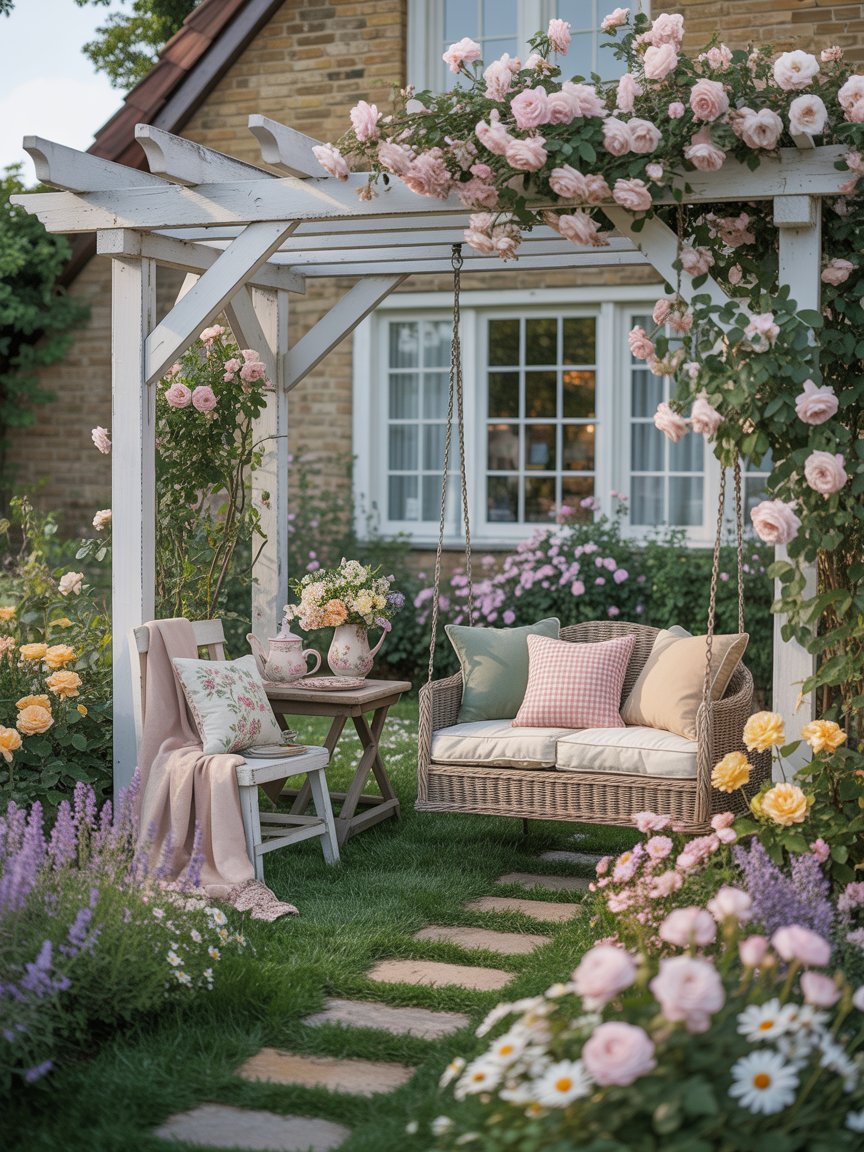
The mycelial model is web thinking. There is no center, only nodes and connections. The garden is a decentralized, self-organizing network where information (nutrients, chemical signals, water) flows multidirectionally. The gardener is not the architect, but a node of conscious intention within the web, one who learns to listen to and influence the flow.
- Implication: We stop asking “What’s wrong with this plant?” and start asking “What is the state of the network around this plant?” A sick plant is a node in a failing network.
2. The Six Principles of Mycelial Gardening
- The Primacy of the Relationship: The connection between a plant root and a mycorrhizal fungus is more fundamental than the plant or fungus alone. We cultivate relationships, not individuals.
- Redundancy is Resilience: A network with multiple pathways for nutrient flow, pollination, and pest control cannot be felled by a single failure. We design for multiplicity, not monoculture.
- Communication is Metabolism: In the web, to communicate (via chemical or electrical signals) is to nourish and to be nourished. A “quiet” garden is a starving one.
- Waste is a Foreign Concept: The output of one node is the input for another. Death, decay, and exudates are not waste; they are the currency of the network.
- Slowness is Intelligence: Fast, linear growth (like an annual crop pumped with fertilizer) often creates brittle, dependent nodes. Slow, networked growth (like a perennial tree in a fungal partnership) creates resilient, intelligent nodes. We value slow knowledge.
- The Edge is the Engine: The most active, creative, and diverse exchanges happen at the interfaces—where forest meets field, where mulch meets soil, where root tip meets fungal hypha. We maximize productive edges.
Part II: The Rhizosphere Praxis – Cultivating the Living Network
3. Inoculating the Network: Beyond Compost
While compost feeds the network, inoculants install its fundamental operating system. We move from generic fertility to targeted microbial ecology.
- Mycorrhizal Inoculants: We don’t just add these to planting holes. We create mycorrhizal soups—blends of endo- and ectomycorrhizal fungi specific to our plant families (vegetables, trees, shrubs)—and apply them as root dips and soil drenches, especially when establishing perennials. We are bootstrapping the internet.
- Bacterial Brews (JADAM/KNF): We harness Local Indigenous Microorganisms (LIMs). Using a potato suspended in water (JADAM) or rice buried in forest duff (KNF), we capture and culture the microbial life already adapted to our bioregion. Applying this is like installing a local operating system instead of a generic, commercial one.
- The Worm Migration: We don’t just buy worms for a bin. We create worm recruitment zones—cool, moist, carbon-rich piles of cardboard and leaves—to attract and breed native earthworm species, the network’s great engineers.
4. The Fibrous Net: Designing for Root Communication
Our planting schemes must facilitate underground chatter.
- The Guild as a Chat Room: A classic permaculture guild is more than a functional assembly; it’s a designed communication hub. The apple tree, comfrey, clover, chives, and nasturtiums aren’t just sharing resources; they are engaged in constant biochemical dialogue, warning of pests, signaling nutrient needs, and nurturing shared mycorrhizal associates.
- Intercropping for Signal Relay: Planting tall, wind-sensitive corn with low, sturdy beans isn’t just about structure. The corn’s root exudates may stimulate nitrogen-fixation in the beans, while the beans’ chemical signals may enhance the corn’s resistance to soil-borne pathogens. We are planting conversations.
- The Perennial Anchor Network: Annual gardens create a boom-bust cycle for soil life. Integrating perennial anchor plants—deep-rooted herbs, shrubs, trees—provides a stable, year-round node in the network. Their consistent root exudates feed a stable microbial community that can then support annual crops, creating a perennial microbial backbone.
5. The Mycelial Currency System: Advanced Cycling
The network’s economy runs on specialized currencies.
- The Liquid Carbon Pathway: We maximize the garden’s primary economic engine. Plants convert sunlight into liquid carbon (sugars) and exude up to 40% of it from their roots to feed microbes. In return, microbes provide nutrients. Our job is to maximize photosynthetic surface area (canopy layers) and protect the rhizosphere (no-till, mulch) to keep this economy thriving.
- Mineral Trading Posts: We establish dynamic accumulator plants (comfrey, borage, yarrow) as central banks for specific minerals. Their deep roots withdraw potassium, silica, calcium from the subsoil and deposit them in their leaves. When we “chop and drop” these leaves, the minerals become available in the topsoil network. They are living mining and distribution centers.
- The Fungal Exchange: We provide the “hardware” for the fungal network by adding woody debris (ramial wood chips from small branches are best). This lignin-rich material selectively feeds the fungi that form the most extensive mycelial networks, literally building the information superhighways of the soil.
Part III: The Gardener as a Node – Human Integration into the Web
6. Developing Hyphal Perception
To act as a beneficial node, we must cultivate new senses.
- Reading the Mycelial Map: We learn to infer network health from surface signs. Fairy rings of mushrooms indicate thriving, expansive mycelium. The smell of geosmin after rain is the scent of actinobacteria, healthy soil engineers. Crumbly, dark soil that smells like a forest is visual and olfactory proof of a rich network.
- The Intuition of Intervention: We move from calendar-based action to signal-based response. We water not because it’s Tuesday, but because the network’s “thirst” is signaled by leaf tone and soil feel. We prune not in winter because a book says so, but when the plant’s energy has withdrawn into the root network (post-leaf fall). We act in rhythm with the network’s pulse.
7. The Human Mycorrhiza: Sharing Beyond the Fence
A node only gains meaning through its connections to other nodes. Our garden must connect to the human social network.
- The Propagule Node: We become a source of networked life. We share not just surplus tomatoes, but root divisions of perennial herbs, cups of homemade mycorrhizal inoculant, cuttings of fungal-associated shrubs. We are sharing functional nodes of the living web.
- The Knowledge Hypha: We host “soil food web workshops” where the main activity is looking at teeming soil life under a microscope. This visceral, awe-inspiring sight does more than teach; it inoculates minds with the mycelial paradigm. We connect our garden’s intelligence to the neural networks of our community.
8. Embracing the Mycological Mandate: Redefining Success
Success in the mycelial garden looks different.
- Yield is a Byproduct, Not a Goal: The primary yield is a thriving, communicative, resilient soil ecosystem. Food, flowers, and beauty are the overflowing byproducts of a network in balance.
- “Pests” are Data Packets: An insect outbreak is not an attack; it is a burst of critical data traversing the network (and the air), indicating an imbalance—perhaps a deficiency of predator habitat or an excess of soluble nitrogen. We diagnose the network flaw the data reveals.
- Time is Stacked, Not Linear: We don’t see a garden year-by-year. We see it in stacked time: the fast cycle of annuals, the medium cycle of shrubs, the slow cycle of trees, and the glacial cycle of soil-building fungi. Our actions are chosen for their effects across all time scales.
Epilogue: Becoming Humus
The ultimate goal of the mycelial gardener is not mastery, but integration. It is to become so woven into the garden’s network that our will and the land’s intelligence become indistinguishable. It is to reach a state where our careful observations, our gentle interventions, and our very presence are as natural to the system as the earthworm’s burrowing or the hypha’s searching tip.
We begin this integration with the simplest, most profound act: refusing to see separation. The boundary between our body and the soil, our breath and the transpiration from the leaves, our consciousness and the chemical signaling in the rhizosphere is porous, permeable, and largely imagined.
Start by kneeling. Place your hands on the ground not as an owner, but as a supplicant seeking connection. Feel the coolness, the texture, the latent life. In that moment, you are not on the earth; you are a node of the earth, reaching out. The mycelial garden awaits your signal. What will you transmit?