
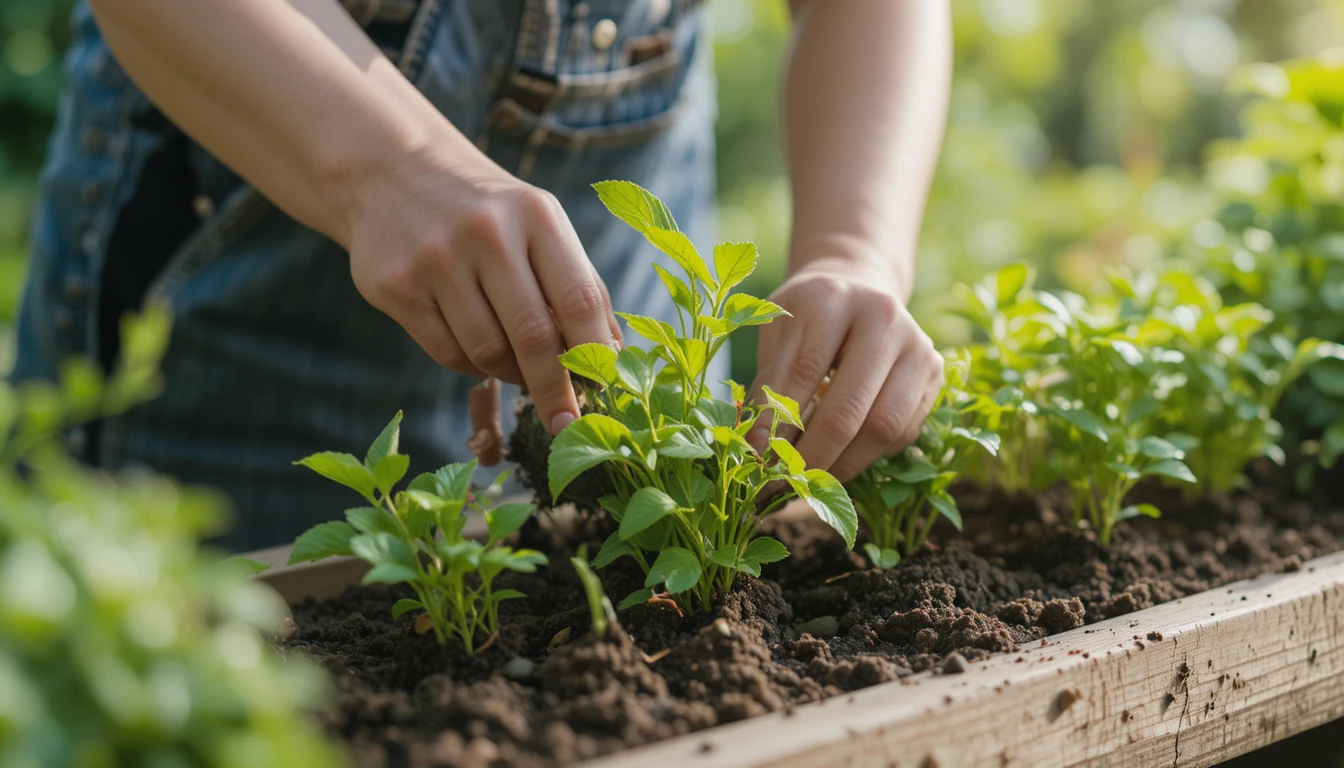
We have sought solutions in the stars, in the silicon chip, in the markets. Yet, beneath our feet lies the oldest, most sophisticated, and most neglected technology in the universe: living soil. It is the primal motherboard, the original internet, the silent symphony that orchestrates all terrestrial life. We are not facing a climate crisis, a food crisis, or a biodiversity crisis in isolation. We are facing a soil crisis. And its solution—the only one that addresses all these cataclysms simultaneously—is a cultural and spiritual return to the humus. This is not a gardening guide. This is a civilizational blueprint. A 4,500-word treatise on why and how we must build a new human identity not as conquerors of nature, but as stewards of soil, and how that shift begins in the space we call our garden.
BOOK I: THE DIAGNOSIS – The Great Unraveling From the Ground Up
1. The Detachment: From Soil-Citizens to Soil-Consumers
For 10,000 years of agriculture, humans understood—viscerally—that their lives were bound to the fertility of a specific patch of earth. They were soil-citizens. The Industrial Revolution severed this bond. We became soil-consumers.

- The Chemical Divorce: The invention of synthetic nitrogen fertilizer (the Haber-Bosch process) allowed us to feed plants without feeding soil. It was the equivalent of giving an IV drip to a patient while starving their microbiome. We achieved staggering short-term yields by bankrupting the soil’s long-term capital.
- The Erosion of Memory: With food arriving from global supply chains, we lost the knowledge of local soil personalities—the sandy loam of the river bottom, the heavy clay of the hill. This loss of pedological literacy (soil literacy) is as dangerous as any loss of language or history. We forgot the ground of our being.
2. The Symptomatology of a Sick World
A degraded soil microbiome doesn’t just grow weak plants; it manifests sickness up the entire chain of being.
- The Nutritional Cascade Failure: Plants grown in sterile, chemical-fed soils are deficient in micronutrients and phytochemicals. This leads to hollow food, contributing to modern human epidemics of chronic disease. We are not just what we eat; we are what what we eat, ate.
- The Hydrological Bankruptcy: Soil devoid of organic matter and fungal networks is like a shattered sponge. It cannot hold water. This leads to catastrophic floods followed by profound droughts, a sick cycle of hydrological whiplash.
- The Atmospheric Imbalance: Healthy soil is the second largest carbon sink on the planet (after the oceans). Degraded soil becomes a carbon source. Our plows and chemicals have turned the land from a breathing lung into a bleeding wound, exhaling millennia of stored carbon.
BOOK II: THE PRINCIPLE – The Humus Society
3. The First Law: All Health Begins in the Soil
This is the non-negotiable foundation of the new paradigm. Human health, ecosystem health, economic health, and climatic stability are not separate domains. They are emergent properties of soil health.
- The Soil-Gut Axis: The diversity of the human gut microbiome is directly correlated to the diversity of the soil microbiome where our food is grown. To heal our guts, we must heal our dirt. Probiotics start in the field, not the pill.
- The Soil-Peace Axis: Societies with deep, localized connections to fertile land have historically been more stable and resilient. Food sovereignty—the ability to feed yourself from healthy soil—is the ultimate foundation of security and freedom.
4. The Humus Mandate: A Call to Action
Therefore, the most radical, patriotic, and future-oriented act a person can perform is to build soil. Not just conserve it. Not just sustain it. To actively, aggressively, joyfully increase the volume, depth, and biological complexity of humus in your sphere of influence. Your garden is not a hobby plot; it is a soil factory, a carbon capture facility, and a biodiversity bank.
BOOK III: THE PRAXIS – The Arts of the Soil-Builder
5. The Alchemical Arts: Beyond Composting
Composting is basic literacy. The soil-builder practices advanced alchemy.
- Bokashi Fermentation: This Japanese method ferments all food waste (including meat, dairy, and citrus) anaerobically in a bucket. The resulting pre-digested, microbial-rich matter can be buried directly in garden beds, where it transforms into soil with stunning speed. It is a time machine for waste.
- Vermicomposting & Black Soldier Fly Larva: We don’t maintain one compost system, but a waste-to-resource portfolio. Worms create the finest, most plant-available castings. Black soldier fly larvae (BSFL) process immense amounts of waste rapidly, producing both rich frass (poop) and protein-rich larvae for poultry. We become waste stream managers.
- Humanure & Liquid Gold: With proper, safe thermophilic composting systems, human waste becomes the ultimate closed-loop fertilizer—terra preta nova. Urine, sterile and rich in nitrogen, phosphorus, and potassium, is diluted and applied as “liquid gold.” This completes the nutrient cycle with shocking elegance, ending our suicidal practice of flushing fertility into the sea.
6. The Architectural Arts: Engineering the Soil Ecosystem
We move from amending soil to designing soil architecture.
- Hugelkultur as a Foundation: We build raised beds or mounds over a core of rotting wood. This is not a raised bed; it is a self-watering, self-fertilizing sponge-reactor that will thrive for 20 years. The decaying wood acts as a moisture sink and a long-term fungal habitat.
- The Fungal Cathedral: We intentionally build fungal-dominant soils for trees and perennials. Layers of ramial wood chips (from small, leafy branches), inoculated with wine cap or garden giant mushroom spawn, create a fungal paradise. This isn’t mulch; it’s building the soil’s neurological tissue.
- Mineral Templating: We don’t just add random rock dust. We re-mineralize strategically. Based on soil tests, we might apply basalt dust for broad-spectrum minerals, granite dust for silicon, or azomite for rare trace elements. We are providing the geological parent material for a new, vibrant soil to form upon.
7. The Pastoral Arts: Integrating the Animal Microbiome
Animals are not separate from the soil system; they are its mobile intensifiers.
- The Chicken Tractor: A movable pen for poultry is not a coop; it is a targeted soil renovation tool. Chickens till, fertilize, and devour pests in a prepared area. After they pass, the area is ready for planting—a fertility pulse on legs.
- Silvopasture & Rotational Grazing: On larger scales, integrating trees with the controlled grazing of ruminants (sheep, cattle) mimics the prairies and savannas that built the world’s deepest soils. The animals’ hoof action, saliva, and manure stimulate grassland ecology while the trees provide shade, fodder, and carbon sequestration. It is agricultural biomimicry at its finest.
BOOK IV: THE GARDEN AS ACADEMY – The Pedagogical Plot
8. The Soil-Builder’s Curriculum
Every garden must become a free, open-air university with one major: Applied Earth Stewardship.
- The Failure Garden: Dedicate a plot to glorious, public experimentation. Try lasagna gardening here, hugelkultur there, compare no-dig to double-dig. Label your failures. A sign that says “Squirrel Devastation Trial Plot” or “Clay Soil Pancake Experiment” teaches more than any pristine success.
- The Phenological Clock: Install a large, hand-painted sign tracking the living calendar: “Peas Planted: Frog Song + 2 days.” “Tomatoes In: Oak Leaves Size of Squirrel Ears.” This teaches bioregional time, re-attaching human activity to natural cues.
- The Microbial Viewing Station: A simple USB microscope connected to a tablet under a canopy, showing visitors the wriggling, swimming universe in a drop of compost tea. This single act—seeing the soil alive—shatters the “dirt” paradigm forever.
9. The Social Mycorrhiza: Networking the Soil-Builders
Just as fungi connect trees, we must connect soil-builders.
- The Soil Carbon Cooperative: Form a local group where members’ soil carbon levels are tested annually. Pool resources to buy bulk amendments (rock dust, biochar). Celebrate not the biggest zucchini, but the greatest percentage increase in soil organic matter. Make it a friendly competition for planetary benefit.
- The Tool & Skill Commons: A community shed housing broadforks, scythes, a trailer, a wood chipper. A shared calendar for expertise: “Mondays: Beekeeping with Leo. Thursdays: Grafting with Marta.” The garden is the locus, but the shared capacity is the yield.
BOOK V: THE POLITICAL IS PERSONAL – From Garden Plot to Bioregional Statecraft
10. The Garden as a Sovereign Act
Building soil is a quiet secession from the extractive economy.
- The Fertility Insurrection: By producing your own fertility (compost, manure, plant-based teas), you remove yourself from the chemical-industrial complex. You stop funding the mining of phosphates, the fracking for natural gas for nitrogen fertilizers. Your garden becomes a zone of economic and ecological independence.
- The Seed Legacy: Saving and swapping open-pollinated seeds adapts life to your specific place, free from corporate control. It is agrarian cryptography, preserving genetic freedom in the face of homogenization.
11. From Yard to Yardstick: Policy from the Ground Up
The principles of the Humus Garden must scale to inform city and regional policy.
- Soil Carbon Credits That Matter: Advocate for local, transparent carbon credit systems where homeowners, schools, and businesses are paid directly and verifiably for increasing soil organic carbon on their properties. Turn every lawn into a retirement account for the atmosphere.
- Municipal “Soil Foundries”: Imagine city facilities that process urban green waste, food waste, and harvested rainwater into high-quality, tested compost and biochar, available for free to residents. This turns waste management into municipal soil-building, a public utility for resilience.
- The Right to Dry Soil: Lobby for ordinances that prevent homeowners’ associations from banning food gardens, rain gardens, or “unkempt” native plantings. This is a fundamental property right to participate in ecological healing.
Epilogue: The New Ground of Being
This is not about a return to a mythical pastoral past. It is about a leap forward into a sophisticated, soil-based future. It is about recognizing that true intelligence is not artificial, but biological—woven into the mycelial mat, encoded in the helical structure of humic acid, expressed in the riot of life in a teaspoon of healthy earth.
The task before us is the great re-soiling of civilization. It begins not with a treaty or a technology, but with a decision: to see the patch of earth under your care not as a possession, but as a patient, a teacher, and a partner in the greatest work of our time.
Pick up a handful of soil. Let it crumble through your fingers. In that dust is the dust of stars, the decay of dinosaurs, the ash of ancient fires, and the potential for all future life. You are not holding dirt. You are holding possibility. Now, go build upon it.