
We do not garden to grow food alone. We garden to grow meaning. In an age of abstraction, where our sustenance comes wrapped in plastic and our realities are filtered through screens, the garden stands as one of the last bastions of the tangible metaphor. It is a place where philosophy gets dirt under its nails, where ethics can be tasted on the tongue, where cosmology unfolds in the lifecycle of a bean. This is an exploration of the garden not as a plot of land, but as a living lexicon of necessary metaphors—a 4,300-word journey into how the simple acts of sowing, tending, and composting teach us to navigate a complex and crumbling world.
Part I: The Foundational Metaphors – The Grammar of Growth
1. The Soil as Memory
We speak of a “nation’s soil” holding its history. This is literal. Soil is not inert; it is a stratified text. Each layer holds pollen from extinct plants, charcoal from ancient fires, pottery shards from forgotten meals. When we garden, we are not gardening in the present. We are gardening in deep time, adding our chapter to a book written by glaciers, bison, and previous stewards.
- Practice: Before you amend, listen. Perform a soil test not just for NPK, but as an archaeological dig. Is there a layer of ash? Sea shells? Brick dust? Let the land’s memory inform your care. Add compost not as a fertilizer, but as a new sentence in an ongoing story.
2. The Compost Pile as Alchemy
Our culture fears decay. We sanitize death, hide aging, and view rot with disgust. The compost pile is the antidote to this fear. It is a lived metaphor for transformation, demonstrating that death is not an end but a necessary phase of recombination. The tomato peel, the fallen leaf, the spent coffee grounds—they are not trash. They are ingredients in a resurrection.
- Practice: Build your compost with ceremony. Layer greens and browns like ingredients in a spell. Turn it not as a chore, but as a stirring of the cauldron. When you spread the finished humus, you are not applying fertilizer; you are spreading a gospel of renewal. This metaphor, internalized, helps us face personal and ecological loss not with despair, but with the quiet knowledge of the composter: This, too, will become part of something new.
3. The Root System as Network
In a hyper-connected digital world, we suffer from profound social and ecological disconnection. We mistake social media “friends” for community. The garden root system—intertwined with miles of fungal hyphae in the mycorrhizal network—offers a truer metaphor for connection. This “Wood Wide Web” shows that relationship is not about visibility, but about invisible, nutrient-based reciprocity. Trees feed seedlings, warn each other of pests, and support the sick through subterranean channels.
- Practice: Plant guilds, not isolates. When you plant a fruit tree, don’t leave it in a lonely circle of mulch. Give it companions—a nitrogen-fixer, a dynamic accumulator, an aromatic protector. You are not planting a tree; you are orchestrating a conversation. Cultivate this below-ground mindset above ground: see your neighborhood not as separate lots, but as a potential network of shared resources, skills, and habitat corridors.
Part II: The Metaphors of Process – The Poetics of Care
4. Pruning as Editing
A writer revises a manuscript, cutting superfluous words to strengthen the narrative. A gardener prunes a tree, removing superfluous growth to strengthen the organism. Pruning is editing for light and air. It is the recognition that strategic removal is an act of love, that not all growth is good growth, and that shape arises from disciplined choice.
- Practice: Approach pruning with a writer’s eye. Ask: What is the central leader (the thesis)? Which branches compete or cross (contradictory ideas)? Where do I want energy to flow (the narrative arc)? Make each cut a deliberate punctuation mark—a comma to pause growth, a period to end a direction, a paragraph break to renew from the base. This teaches discernment in our own lives: the courage to cut away what drains energy to make space for what truly bears fruit.
5. The Pollinator Path as Hospitality
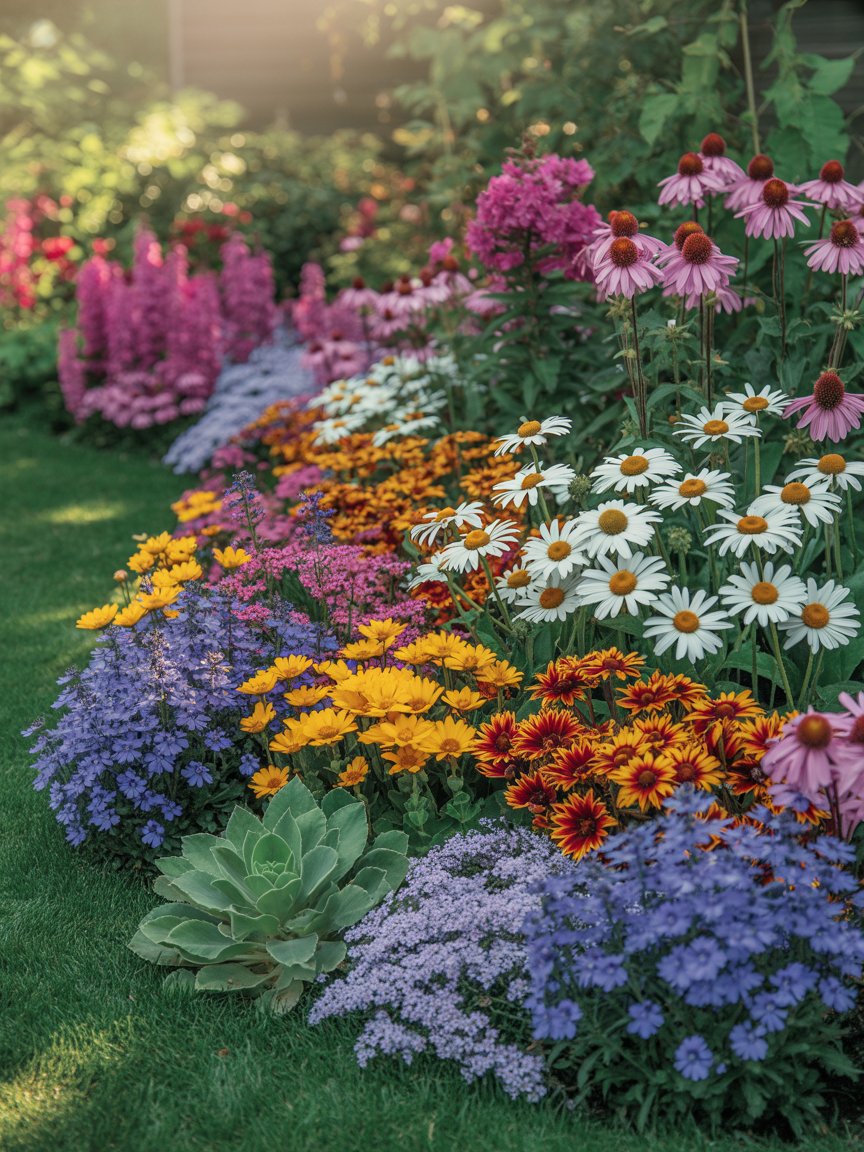
We think of flowers as being for us. They are not. They are landing lights and fueling stations for beings of another order. Planting for pollinators is an act of radical hospitality. It says to the bee, the butterfly, the hummingbird: This place is for you, too. Your needs have been considered. It is a metaphor for an inclusive ecology, where human spaces are not human-exclusive.
- Practice: Design a “pollinator saloon”—a succession of blooms from early spring to late fall. Provide a water source with stones for perching. Leave bare ground for native bee nests. You are not just growing flowers; you are curating an embassy for the non-human world. Extend this metaphor: How does your home, your community, signal hospitality to the marginalized, the displaced, the “other”?
6. The Rain Garden as Reconciliation
Water is the ultimate traveler, recognizing no property lines. In conventional landscaping, we treat rainwater as a nuisance, hurrying it off our property into overloaded sewers. A rain garden is a gesture of reconciliation with the water cycle. It is a sunken bed that says, “Stay awhile. Be cleansed by these roots and stones before you continue your journey to the water table.”
- Practice: Install a rain garden at the lowest point of your yard, where water naturally gathers. Plant it with tough, deep-rooted natives that can handle both deluge and drought. This small act is a powerful metaphor for working with natural forces rather than against them, for offering forgiveness to the flood, and for understanding that our highest duty is to be a beneficial stop on a larger journey.
Part III: The Metaphors of Struggle – The Wisdom of Limits
7. The Pest as Messenger
We declare war on aphids, squash bugs, and deer. But in the metaphorical garden, a “pest” is not an enemy. It is a cipher, a message from the ecosystem. An aphid explosion signals an imbalance—often too much nitrogen, not enough predator habitat. The deer’s persistent browsing reveals a lack of appropriate barrier or, perhaps, that we’ve planted an irresistible buffet in their historical corridor.
- Practice: When you see damage, don’t reach for spray. Reach for a question. What is out of balance? What is lacking? The answer is almost always a missing relationship. Plant dill to attract parasitic wasps. Accept that the outer row of lettuce is a tax paid to the ecosystem. This reframes all conflict: the “pest” in our life—be it a person, a habit, a fear—is often a messenger pointing to a deeper imbalance we need to address.
8. The Weed as Pioneer
We pour poison on dandelions, oblivious to their role. A weed is nature’s first responder. It arrives on bare, wounded, compacted earth to begin the slow work of healing. Its taproot breaks hardpan. Its leaves shade the soil. It lives, dies, and adds organic matter, preparing the ground for more complex communities.
- Practice: Practice diagnostic weeding. Learn to identify your common “weeds” and what they indicate about your soil. Chickweed? Cool, moist, fertile soil. Plantain? Compacted, acidic soil. Instead of waging war, ask: “What repair work are you doing?” Then, once you’ve understood the message, you can decide to let it continue its work or to gently replace it with a cultivated plant that performs the same ecological function (e.g., clover instead of plantain for compaction).
9. The Failed Crop as Experiment
In a success-obsessed culture, failure is shameful. In the garden, failure is the most crucial data point. The tomatoes that blighted taught you about air circulation and resistant varieties. The kale that bolted taught you about planting time and heat tolerance. The garden is a laboratory where the cost of failure is a season, not a soul.
- Practice: Keep a “Garden of Loss” journal. Document not just your triumphs, but your spectacular failures. Analyze them without self-judgment. This cultivates intellectual resilience—the ability to detach ego from outcome and see every result, especially the bad ones, as information. It is training for a life where adaptability is more valuable than perfection.
Part IV: The Ultimate Metaphor – The Garden as a Model for Civilization
10. Polyculture vs. Monoculture: A Choice of Worlds
Our industrial civilization is a monoculture of the mind: one model of progress, one metric of success (GDP), one dominant crop (annual grains). It is efficient but fragile, requiring constant inputs and vulnerable to collapse.
The garden offers the polyculture model: many species, many functions, layered in time and space. It is complex, redundant, and resilient. Its yield is not maximized in one dimension but optimized across multiple dimensions: food, medicine, habitat, beauty, soil building.
- Practice: Make your garden a miniature model of this polycultural world. Stack plants vertically. Choose perennials over annuals. Seek relationships, not just yields. Then, let this thinking infect your other domains. How can your work life incorporate more “polyculture”—diverse skills, income streams, collaborative relationships? How can your community emulate these principles?
11. The Perennial Shift: Thinking in Lifetimes, Not Seasons
Annual thinking drives our economy and politics: the quarterly report, the election cycle, the quick return. The garden teaches perennial thinking. An asparagus bed takes three years to establish but produces for twenty. An oak tree planted today will shade grandchildren. This is the timescale of legacy, of climate healing, of true culture.
- Practice: Plant something you will never harvest. A nut tree. A heritage apple variety. A clump of bamboo for future stakes. Make a plan for your garden that extends beyond your own lifetime. This simple act is a radical stand against short-termism, a declaration that you are part of a chain of being that stretches far beyond yourself.
Epilogue: Tending the World-Within-the-World
The garden, then, is more than a hobby. It is a mandatory curriculum for being human in the 21st century. Its metaphors are not decorative; they are survival skills. To learn the patience of the composter, the discernment of the pruner, the hospitality of the pollinator host, and the resilience of the polyculture is to equip oneself for the great unraveling and re-weaving of our time.
You are not just growing beans. You are growing a worldview.
Start with a single metaphor. Let it root in your mind as you work the soil. Perhaps it is the humble compost pile, teaching you to transform waste into wealth. Perhaps it is the stubborn dandelion, teaching you to listen to the land’s cries for help. Tend this metaphor as you would a seedling. Water it with attention. Protect it from the frosts of cynicism.
In time, you will find you are not merely gardening a plot of earth. You are gardening your consciousness, cultivating a more connected, resilient, and generous way of being—one necessary metaphor at a time.