
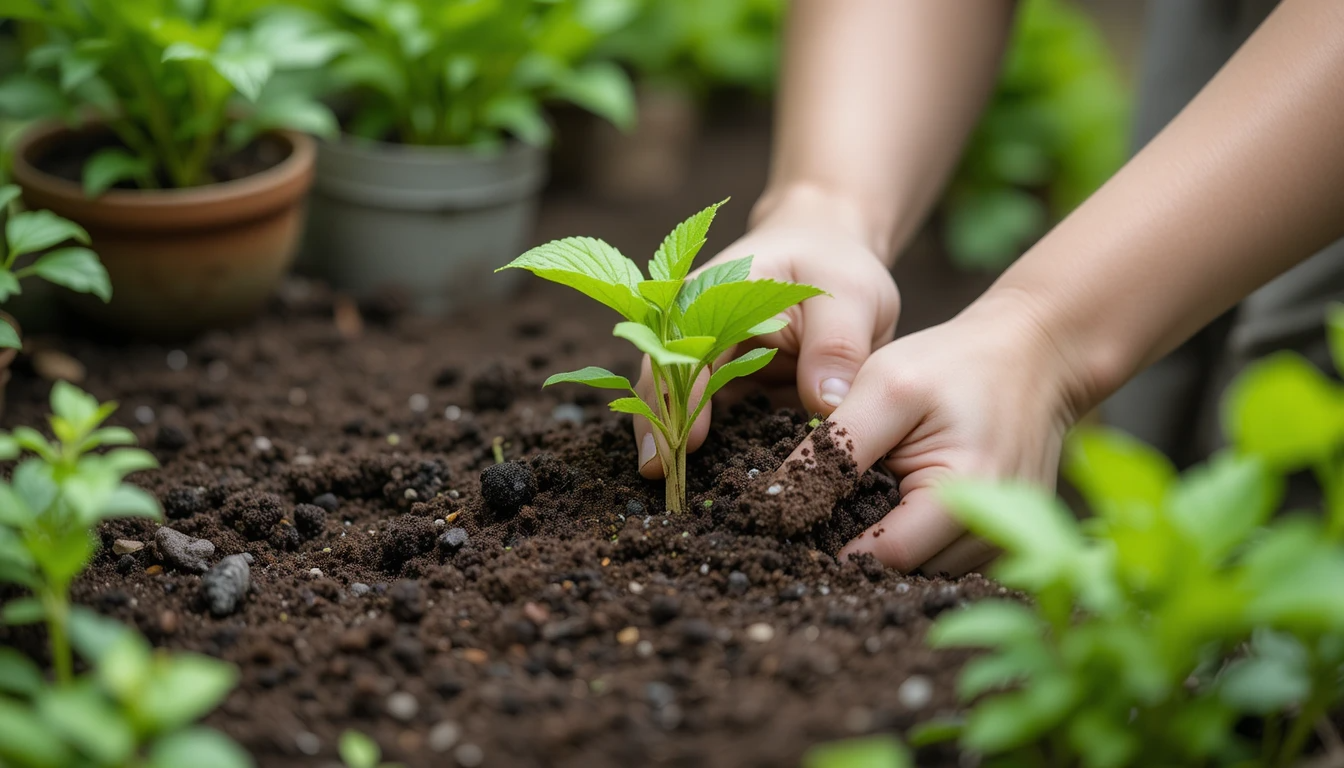
Imagine creating new plants from cuttings of your favorites. Breeding a tomato perfectly adapted to your balcony’s microclimate. Discovering a spontaneous variegation that becomes your signature plant. This is plant alchemy—the magical intersection of science, patience, and wonder that transforms you from a plant keeper to a plant creator. Welcome to the living laboratory where your curiosity becomes your greatest gardening tool.
Chapter 1: The Propagation Grimoire
1.1 The Eight Pathways of Plant Creation
1. Stem Cuttings (The Classic)

- Water Propagation Theater: Clear vessels where root drama unfolds
- The Rooting Hormone Spectrum: Willow water (natural) to synthetic powders
- The “Node is God” Rule: Every successful cutting honors the node
- Patience Thresholds: Pothos (7 days) vs. Fiddle Leaf Fig (60+ days)
2. Leaf Cuttings (The Miraculous)
- African Violet Sorcery: One leaf → dozens of plantlets
- Succulent Geometry: Perfect rosettes from single leaves
- Rex Begonia Alchemy: Vein cuttings creating living mosaics
- The Callus Commandment: Let wounds dry before introducing to moisture
3. Division (The Instant Army)
- Rhizome Revelry: Iris, ginger, bamboo—underground multiplication
- Offset Harvesting: Spider plants, strawberries, sempervivums
- The Rule of Thirds: Never take more than 1/3 of parent plant
- Seasonal Timing: Spring for most, post-bloom for others
4. Layering (The Attached Cutting)
- Air Layering Magic: Rooting branches while still attached
- Simple Layering: Burying stem sections while connected
- Tip Layering: Blackberries, raspberries—nature’s cloning
- The Chinese Pot Method: Ancient technique for perfect roots
5. Seed Saving (The Time Capsule)
- Heirloom vs. Hybrid: Understanding genetic inheritance
- Fermentation Method: Tomato seed saving like fine wine
- Wind Pollination Protocols: Preventing corn cross-pollination
- The 10-Year Test: How long seeds really remain viable
6. Grafting (The Botanical Marriage)
- Whip-and-Tongue: The elegant join
- Cleft Grafting: Adding varieties to existing trees
- Approach Grafting: Ficus strangler fig technique adapted
- The Compatibility Code: What can marry what
7. Tissue Culture (The Mad Science)
- Home Lab Setup: Pressure cooker as autoclave
- Agar Recipes: The perfect plant Jell-O
- Sterile Technique: The dance of the laminar flow hood (DIY version)
- Multiplication Rates: 1 plant → 1,000 in 90 days
8. Spore Propagation (The Ancient Way)
- Fern Spore Prints: Like mushroom spore art
- Prothallus Stage: The secret sexual phase
- Terrarium Nurseries: Creating primordial conditions
- The 6-Month Wait: Patience as virtue
1.2 The Propagation Chamber: DIY Biosphere
The Ultimate Setup for $50:
- Clear storage bin with lid
- Heat mat with thermostat
- LED grow light strip
- Perlite reservoir for humidity
- Mini fan for air circulation
- Success Rate: 90%+ for most cuttings
The “Windowsill Wonder” Setup:
- Mason jars with plastic wrap tops
- East-facing window
- Spray bottle for misting
- Success Rate: 60-70% for easy plants
Chapter 2: Mutation & Variegation Hunting
2.1 The Spontaneous Mutation Garden
Creating Conditions for Magic:
- Chemical Mutagens: Ethyl methanesulfonate (advanced, careful!)
- Radiation Exposure: Cosmic rays at high altitudes, UV light experiments
- Tissue Culture Surprises: Somaclonal variation in lab conditions
- The “Lucky Find”: Spotting sports in commercial nurseries
2.2 The Variegation Types Decoded
Pattern Recognition:
- Chimeral: Unstable, reverts easily (Monstera Thai Constellation)
- Blister/Reflective: Air pockets under epidermis (Scindapsus)
- Pattern-Gene: Stable, inherited (Calathea patterns)
- Viral: Not true variegation, often harmful (Tulip breaking virus)
2.3 The Reversion Recon Mission
When Green Fights Back:
- Early Detection: The single all-green leaf appearing
- Surgical Removal: Cutting below the reversion point
- Light Manipulation: More light often encourages variegation
- The Hormone Nudge: Cytokinin applications to stimulate variegated growth
2.4 Cultivating Your Signature Mutation
Case Study: Creating “Your” Variety
- Find a sport (unusual growth on normal plant)
- Isolate through propagation
- Stress test (different conditions)
- Stabilize through generations
- Name and document
Chapter 3: The Home Plant Breeding Program
3.1 The Genetics Crash Course
Mendel in Your Living Room:
- Dominant/Recessive: Understanding trait inheritance
- F1 vs. F2 Hybrids: What you can and can’t save seeds from
- Backcrossing: Fixing desired traits
- Selection Pressure: Choosing which plants get to be parents
3.2 The Pollination Toolkit
Controlled Matings:
- Emasculation Bags: Preventing unwanted pollination
- Tiny Paintbrushes: Transferring pollen with precision
- Flower Anatomy 101: Knowing stamens from pistils
- Timing is Everything: When flowers are receptive
3.3 Breeding Projects for Beginners
1. The Colored Basil Project:
- Cross purple basil with lemon basil
- Select for color and flavor over generations
- Create “Midnight Lemon” variety
2. The Micro-Tomato Quest:
- Breed cherry tomatoes for container size
- Select for taste, not just smallness
- Stabilize at 12″ height max
3. The Scented Geranium Collection:
- Cross rose-scented with lemon-scented
- Create new fragrance profiles
- Select for leaf shape and scent strength
4. The Never-Bolt Lettuce:
- Select slowest-to-bolt plants each generation
- Create heat-tolerant varieties
- Combine with unusual colors
3.4 The 5-Generation Stabilization Plan
Year 1: Make initial cross, grow F1 generation
Year 2: Grow F2, select desired traits (the big variation year)
Year 3: F3 generation, continue selection
Year 4: F4, traits beginning to stabilize
Year 5: F5, variety is stable, seeds breed true
Chapter 4: The Living Experiment Log
4.1 Designing Clean Experiments
The Scientific Method for Gardeners:
- Question: “Does cinnamon actually help rooting?”
- Hypothesis: “Cinnamon will increase rooting speed by 20%”
- Experiment: 20 cuttings with cinnamon, 20 without
- Controls: Same plant, same size cuttings, same conditions
- Data: Root length measured weekly
- Conclusion: Supported or rejected
4.2 Citizen Science Projects
Contributing to Real Science:
- Phenology Tracking: Bloom times, climate change indicators
- Pollinator Watch: Which plants attract which insects
- Soil Microbe Mapping: Home microscope observations
- GMO Detection: Learning PCR basics for home testing (advanced)
4.3 The Home Lab Equipment Tier List
Tier 1: The Curious Beginner ($100)
- Jewelers loupe (30x magnification)
- pH and EC meters
- Digital scale (0.01g precision)
- Grow light with timer
Tier 2: The Serious Hobbyist ($500)
- USB microscope (1000x)
- Home DNA extraction kit
- Soil testing lab access
- Environmental data logger
Tier 3: The Home Scientist ($2000)
- Sterile laminar flow hood
- PCR machine for DNA analysis
- Refrigerated incubator
- Laboratory grade microscopes
Chapter 5: Extreme Propagation Challenges
5.1 The “Impossible” Plants Club
Plants That Defy Convention:
- Orchids from Seed: Requires fungal symbionts or sterile media
- Carnivorous Plants: Specialized conditions for germination
- Parasitic Plants: Dodder, mistletoe—host requirements
- Ancient Seeds: Attempting to germinate century-old finds
5.2 Resurrection Botany
Bringing Back the Lost:
- Historic Variety Hunt: Finding heirlooms thought extinct
- Seed Bank Raiding: Legal access to preservation collections
- The 100-Year Seed Experiment: Planting seeds saved by your grandparents
- Cryopreservation Attempts: Home experiments with liquid nitrogen
5.3 Space Gardening Experiments
Preparing for Off-World:
- Martian Soil Simulants: Growing in regolith analogues
- LED Spectrum Optimization: Different wavelengths for different plants
- Closed System Ecology: Balancing oxygen/CO2 with human breathing
- Radiation Exposure Tests: How plants handle cosmic ray levels
Chapter 6: The Ethics of Plant Creation
6.1 The Ownership Questions
What Can You Actually “Own”?
- Plant Patents: Understanding what’s protected
- Open Source Seeds: The movement against patenting life
- Traditional Knowledge: Respecting indigenous breeding
- The “Finders Keepers” Dilemma: Discovered mutations
6.2 Biohacking Responsibility
Safe & Ethical Experimentation:
- Containment Protocols: Preventing escape of modified plants
- Transparency: Labeling experimental plants clearly
- Community Review: Sharing methods and results
- The Precautionary Principle: When in doubt, be conservative
6.3 The Sharing Economy of New Varieties
Ways to Distribute Your Creations:
- Seed Swap Networks: Traditional exchange
- Open Source Plant Licenses: Creative Commons for biology
- Community Supported Biodiversity: Members get new varieties first
- The “Pay It Forward” Model: Free seeds with request to share later
Chapter 7: The Aesthetics of Experimentation
7.1 Displaying Your Living Collection
The Laboratory as Gallery:
- Propagation Walls: Test tubes in illuminated frames
- Mutation Display Cases: Showing progression of varieties
- Living Phylogeny Trees: Showing relationships between your creations
- The “Work in Progress” Section: Experiments openly displayed
7.2 Documenting the Journey
Beyond the Notebook:
- Time-Lapse Stations: Growth from cutting to plant
- Digital Twins: 3D scans of significant plants
- Genetic Barcodes: Simple DNA fingerprints
- The Propagation Journal as Art Book: Illustrations, photos, data
7.3 Naming Your Creations
The Art of the Perfect Name:
- Descriptive: ‘Midnight Sparkle’ for dark, glittery leaves
- Personal: Incorporating your name or story
- Mythological: Connecting to stories and archetypes
- Humorous: When the experiment had personality
Chapter 8: The Future of Home Plant Science
8.1 Democratized Biotechnology
Tools Becoming Accessible:
- CRISPR Kits: Gene editing at home (controversial, emerging)
- DNA Sequencers: Pocket-sized, affordable
- Metabolite Analyzers: Testing plant compounds at home
- Remote Sensing: Drones for phenotype analysis
8.2 The Home Plant Observatory Network
Citizen Science at Scale:
- Thousands of home experiments coordinated
- Distributed climate change research
- Open source plant breeding data
- Real-time mutation discovery network
8.3 Preparing for Climate Adaptation
Breeding for the Future:
- Heat tolerance testing across neighborhoods
- Drought resistance experiments
- New pest/disease responses
- Creating locally adapted varieties faster than commercial breeders
Chapter 9: The Spiritual Dimension of Creation
9.1 The Gardener as Co-Creator
Philosophical Implications:
- Responsibility that comes with creation
- Humility in the face of natural systems
- The line between guiding and forcing
- Acceptance of unexpected outcomes
9.2 Rituals of the Alchemist
Practices for Mindful Creation:
- Seed Blessing Ceremonies: Before planting experiments
- Propagation Gratitude: Thanking parent plants
- Mutation Celebration: Honoring the unexpected
- Failed Experiment Release: Learning to let go
9.3 The Slow Science Manifesto
Principles for the Patient Creator:
- Observe more, intervene less
- Work with plant time, not human time
- Celebrate process over product
- Share failures as generously as successes
- Remember you are collaborating with life
Chapter 10: Your First Alchemical Projects
10.1 The 30-Day Propagation Challenge
Week 1: The Water Roots Quest
- Propagate 5 different plants in water
- Document root emergence daily
- Compare speeds and patterns
Week 2: The Soil vs. Water Test
- Same plant cuttings in both media
- Measure growth weekly
- Discover which plants prefer which
Week 3: The Hormone Experiment
- Test different rooting aids
- Willow water vs. honey vs. commercial powder
- Track success rates
Week 4: The Mutation Hunt
- Examine all plants for unusual growth
- Isolate any finds
- Begin propagation of discovered sports
10.2 The Year-Long Breeding Program
Month 1-3: Choose your breeding project
Month 4-6: Make controlled crosses
Month 7-9: Grow first generation, select best
Month 10-12: Make second generation crosses
Year 2: Stabilization begins
Year 3: You have a new variety
10.3 The Legacy Project
Creating Something That Outlives You:
- Breeding a tree that will mature in 50 years
- Seed bank for future generations
- Documented varieties shared widely
- Knowledge passed through teaching
Conclusion: The Never-Ending Experiment
Plant alchemy isn’t a destination—it’s a way of seeing. It’s looking at every leaf as potential, every flower as possibility, every seed as a future forest. It’s recognizing that in your hands, with patience and attention, you can participate in the ancient dance of creation that usually happens hidden in wild places.
The true magic isn’t in creating the perfect variegated Monstera (though that’s fun). It’s in developing the eyes to see possibilities where others see only plants. It’s in becoming so intimate with growth that you can sense what a cutting needs before it shows you. It’s in the humility of watching a seedling defy all your expectations and become something entirely new.
Your laboratory is wherever you place a cutting in water. Your legacy is in every seed you save and share. Your contribution to the world is in the genetic diversity you steward and the wonder you inspire.
Start simple: take a cutting today. Watch it closely. Ask it questions through experiments. Listen to what it teaches you. The green path of the plant alchemist begins with a single snip of the scissors and a heart full of curiosity.
The plants are waiting to show you what they can do. Are you ready to learn their language?
Share your plant experiments with #HomePlantLab. Document the failures as proudly as the successes. We’re rewriting the book of botanical knowledge, one windowsill experiment at a time.