
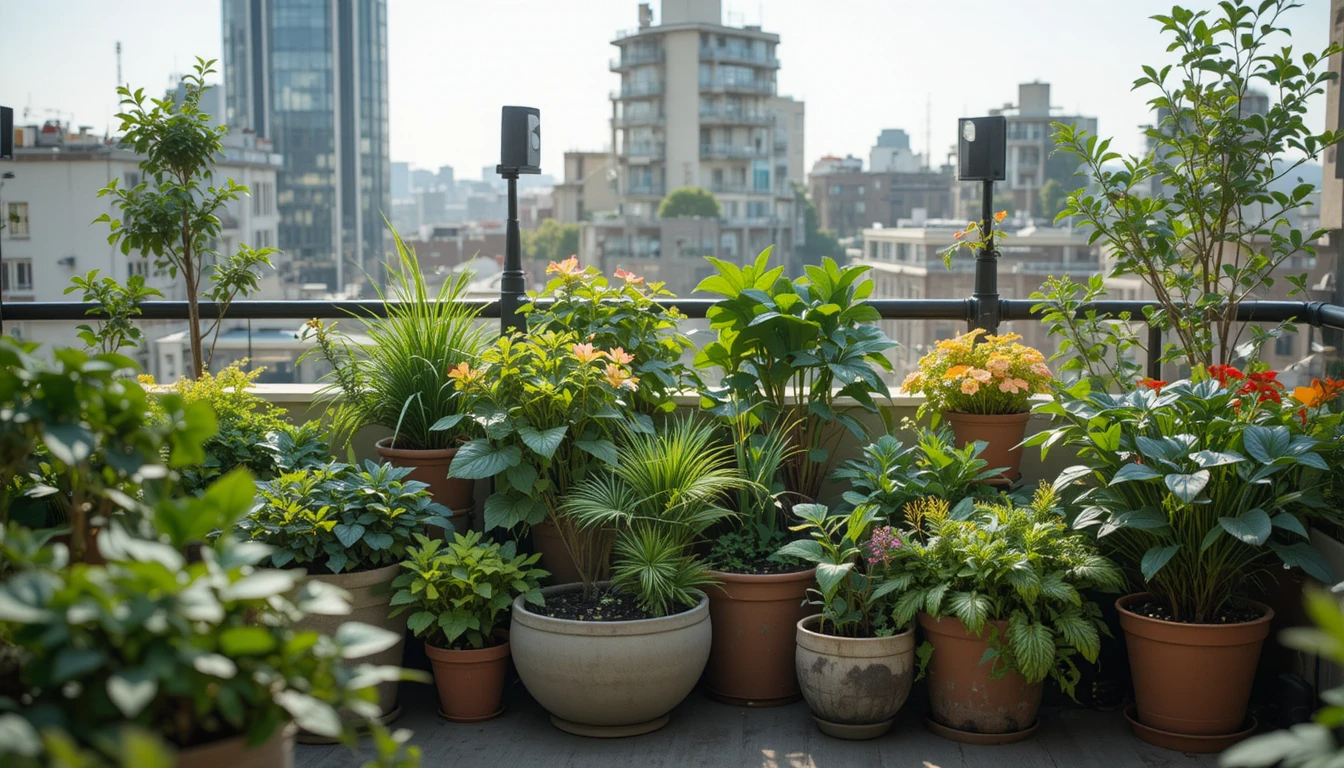
For centuries, we’ve viewed plants as passive, silent occupants of our world—beautiful but simple organisms that simply grow, flower, and die. But what if your garden was not a collection of silent statues, but a vibrant, chattering community? What if the trees, flowers, and vegetables in your backyard were engaged in a constant, sophisticated dialogue?
Modern science has pulled back the curtain on one of nature’s best-kept secrets: plants are brilliant communicators. They warn each other of danger, share resources, and even recognize their kin. Understanding this hidden language doesn’t just satisfy curiosity; it transforms you from a gardener who grows plants into a steward who listens to an ecosystem.

Let’s tune into the secret frequencies of your garden.
1. The Chemical Whisper: Sending SOS Through the Air
When a caterpillar begins munching on a tomato plant, the plant doesn’t just sit there and take it. It fights back with chemistry.
- How it Works: The injured leaf releases a cocktail of Volatile Organic Compounds (VOCs) into the air—a silent, aromatic scream. Neighboring plants of the same species (and sometimes even different ones) “smell” these compounds with their leaves.
- The Result: The listening plants receive the signal: “Attack in progress!” They immediately begin producing their own defensive chemicals, like tannins or toxins, making their leaves less tasty before the caterpillar arrives. It’s a neighborhood watch system, powered by scent.
What This Means for Your Garden: Diversity is a strength. Mixing plant types (companion planting) can create a robust communication network. A besieged basil plant might release signals that help prepare a nearby pepper plant for an aphid attack.
2. The Wood Wide Web: The Underground Internet of Fungi
This is perhaps the most revolutionary discovery in botany. Beneath your feet, connecting the roots of nearly 90% of land plants, is a vast, symbiotic network of fungal threads called mycorrhizae.
- How it Works: Think of the mycelial network as nature’s fiber-optic internet. These fungal threads connect individual plants, forming a mycorrhizal network (often called the “Wood Wide Web”). Through this network, plants can exchange an astonishing array of things:
- Nutrients: A mature tree in sunlight can send excess carbon sugars to a shaded seedling.
- Water: Plants in drier soil can receive water from those with better access.
- Information: Warning signals about pests or diseases can travel rapidly through the fungal pathways.
- Allelochemicals: Some plants can even send harmful chemicals to suppress the growth of competitors.
What This Means for Your Garden: Healthy soil is a connected soil. By avoiding harsh fungicides and tilling (which destroys this delicate fungal network), and by adding organic matter like compost, you foster this crucial underground social web. You’re not just feeding plants; you’re maintaining their internet infrastructure.
3. Kin Recognition & Root Chatter
Plants can distinguish between “self,” “kin” (relatives), and “stranger” through chemical cues released by their roots.
- How it Works: When the roots of two plants grow near each other, they engage in a form of chemical “handshaking.” Research has shown that some plants, like the Great Lakes sea rocket, will aggressively compete for resources with unrelated strangers but will curb their root growth when they detect a sibling, effectively sharing the space.
- The Result: This suggests a level of social cooperation and family recognition previously unimagined in the plant kingdom.
What This Means for Your Garden: When thinning seedlings or transplanting, handle roots gently. You are interrupting a sensitive communication organ. Understanding that plants are aware of their neighbors adds a new layer of respect to the practice of spacing and plant placement.
4. Sound and Vibration: Sensing the World Through Waves
While plants don’t have ears, they are highly sensitive to vibrations in their environment.
- How it Works: Studies have shown that roots can grow toward the sound of running water, even if the water source is hidden. More remarkably, some research indicates that plants can respond to the specific vibration frequency of a munching caterpillar and begin producing defensive chemicals. They may even emit their own faint clicking sounds from their roots.
- The Result: The garden is a symphony of vibrations—from insect footsteps to wind through leaves—and plants are attuned listeners.
What This Means for Your Garden: The age-old practice of “talking to your plants” might have a scientific kernel of truth. It’s not about the words, but the carbon dioxide you exhale and the gentle, positive energy. More practically, it underscores the importance of a low-stress environment; harsh, chaotic vibrations could be a source of plant “stress.”
How to Become a Translator for Your Garden’s Language
You can’t hear the chemical signals or see the fungal emails, but you can garden in a way that honors this complexity:
- Observe Holistically: Look for patterns. If one plant is hit by pests, check its neighbors. Are they resisting? The communication network might be at work.
- Prioritize Soil Health: Foster the mycorrhizal network. Use compost, avoid soil sterilization, and consider using mycorrhizal inoculants when planting trees and perennials.
- Plant in Communities: Mimic nature by creating polycultures—diverse groups of plants that can support and defend each other, rather than solitary rows of a single crop.
- Be a Gentle Presence: Move slowly and deliberately in the garden. Your presence is part of its environment. Gentle handling minimizes disruptive “noise” for your plants.
Conclusion: From Gardener to Ecosystem Partner
Learning that plants communicate challenges us to abandon the outdated notion of them as inert decoration. Your garden is a social network, a support group, and a cooperative society.
When you water, weed, or harvest, you are not intervening upon passive objects. You are participating in a ancient, intelligent dialogue. You are a member of the community. This perspective fosters a profound sense of respect and wonder, turning every gardening task into an act of partnership with a living, talking, incredibly wise world.
The next time you step into your garden, pause and remember: you are surrounded by chatter. Listen not with your ears, but with your curiosity. The secrets of the whispering garden are waiting to be understood.
Does this change how you view your plants? Will you garden differently knowing about their secret communications? Share your thoughts and wonder in the comments below!