
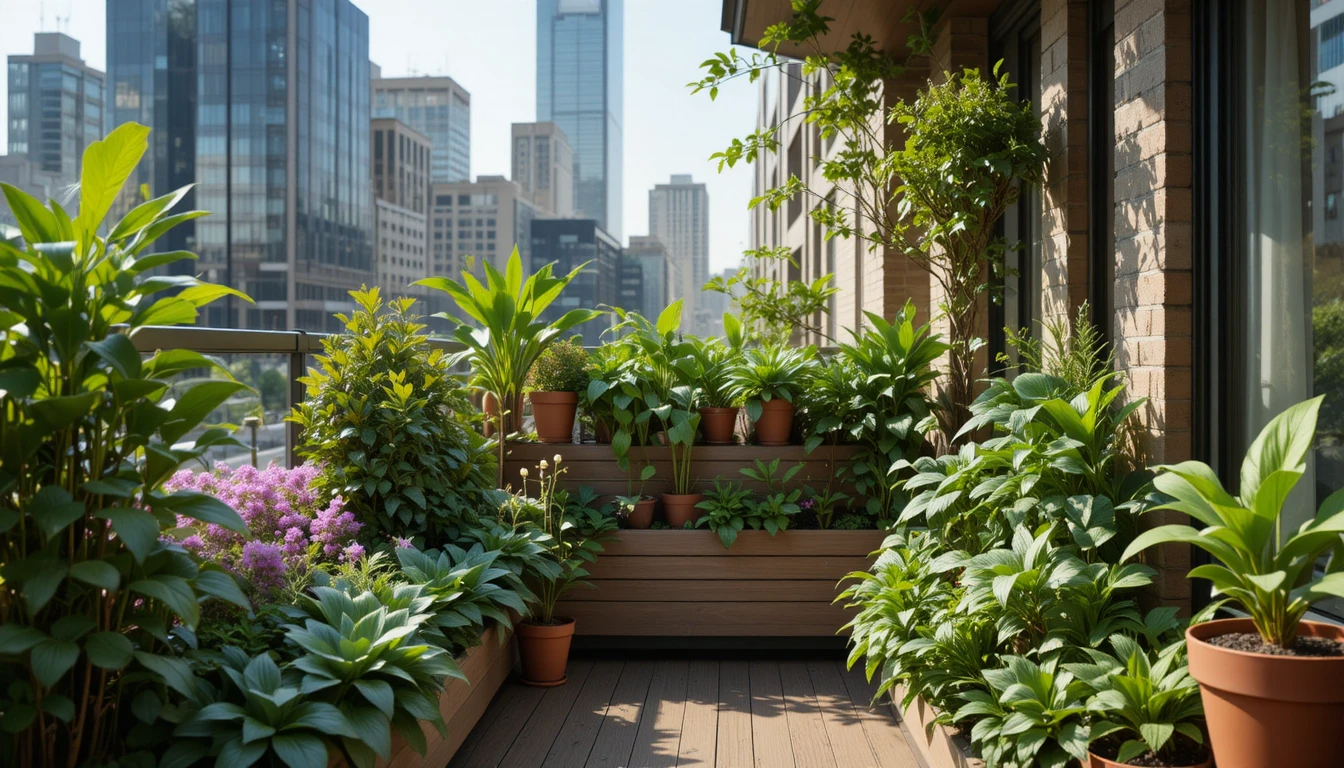
Before there were words, there were gardens. The earliest human settlements were not cleared of nature, but carefully woven into it—forest gardens, edible landscapes, managed wetlands. Our ancestors spoke a fluent, silent language of co-creation with the living world. Modernity rendered us monolingual, speaking only the dialect of extraction and control. This guide is an invitation to recover that lost fluency. To garden regeneratively is to learn to read the land’s syntax, to speak in the vocabulary of root systems and rain shadows, and to compose living poetry in collaboration with soil, water, and season. This is not merely about technique; it is about cultivating ecological literacy—the ability to “read” a landscape as one would a complex text, and to respond with interventions that amplify its inherent intelligence. We embark on a 3,700-word journey to transform your relationship with any patch of earth, from balcony to acreage, into a profound conversation that heals both land and gardener.
Volume I: The Grammar of Place—Learning to Read Before We Write
Chapter 1: The Land’s Autobiography
Every piece of land tells a story written in geological time, shaped by glaciers, rivers, fires, and human hands. Our first task is to become biographical detectives.

- Reading the Geological Handwriting: Is your soil sandy (ancient seabed or river delta)? Clay-heavy (old lakebed)? Rocky glacial till? These characteristics dictate drainage, fertility, and which plants will thrive. Simple jar tests and observing how water behaves after rain become your first translation exercises.
- Decoding Successional Clues: What is growing without your help? Pioneer species like goldenrod, Queen Anne’s lace, or certain grasses tell you about soil compaction, acidity, and fertility. They are not problems to be eradicated, but diagnostic tools and nature’s first healers.
- Listening to the Water’s Memory: Where do puddles linger? Where does the land crack in drought? These patterns reveal the watershed’s logic on your property. You are not bringing water to the garden; you are revealing the water that wants to be there.
Chapter 2: The Syntax of Microclimates
A garden is not one place, but a mosaic of many. A few feet can separate a sun-baked desert from a cool, damp refuge. Mapping these zones is like diagramming the sentences of your landscape.
- The Heat Sinks: South-facing walls, dark stone paths, and paved areas absorb and radiate heat, creating zones 5-10 degrees warmer. These are your microclimate “verbs”—places of action where heat-loving tomatoes, peppers, and figs can thrive beyond their usual range.
- The Cold Air Pools: Low spots, especially at the base of slopes or behind solid fences, are where frost settles first and lingers longest. These are your landscape’s “commas”—pauses where tender plants should be avoided, but where cold-hardy greens or overwintering insect habitat might be placed.
- The Wind Channels: Gaps between buildings, hill crests, and fence corners create wind tunnels that desiccate plants and accelerate evaporation. These are the landscape’s “exclamation points”—areas requiring windbreaks of tall grasses, shrubs, or woven fencing to soften their force.
Chapter 3: The Vocabulary of Time: Phenology as Calendar
Forget the static grid of the wall calendar. The garden keeps time through phenology—the study of cyclic and seasonal natural phenomena.
- Developing Your Local Phenological Guide: Create your own almanac. Record:
- First Emergences: When do dandelions bloom? When do robins return?
- Key Indicators: “Plant peas when forsythia blooms.” “Sow tomatoes when lily-of-the-valley flowers.” “Treat for apple scab when crabapple petals fall.”
- Insect Hatches: The emergence of specific pollinators or pests is tied not to a date, but to accumulated heat units (growing degree days).
- This living calendar is more accurate than any human-made one, as it is directly responsive to the unique climatic conditions of each year. It re-embeds you in the true rhythm of your place.
Volume II: The Living Composition—Advanced Practice as Poetic Form
Chapter 4: The Rhizosphere Revolution: Engineering the Soil Biome
We move beyond generic compost to targeted biome engineering. Think of it as curating a symphony of microorganisms.
- Bacterial vs. Fungal Orchestration: Understanding the ratio is key. Bacterially-dominated soils (promoted by green mulches, manures, and tilling) favor annual vegetables. Fungally-dominated soils (promoted by wood chips, leaf litter, and no-till) support trees, shrubs, and perennials. You can manipulate this ratio through specific mulches and inoculants.
- Jadam & KNF: Indigenous Microbial Solutions: Learn from Korean Natural Farming (KNF) and Jadam practices, which teach how to cultivate Local Indigenous Microorganisms (LIMO). Techniques like Jadam Microbial Solution (JMS) involve fermenting potatoes in water to cultivate a powerhouse of local bacteria for pennies, outperforming expensive commercial products.
- The Biochar Nexus: Incorporate charged biochar—not as an inert additive, but as a microbial sanctuary. Soak it in compost tea, worm leachate, or fermented fish fertilizer before adding to soil. Its vast surface area becomes a permanent, safe city for beneficial microbes, locking nutrients in the root zone.
Chapter 5: The Hydrological Haiku: Capturing, Concentrating, and Celebrating Water
Water management becomes an art of minimal, impactful intervention—a three-line poem with profound meaning.
- Line 1 (Capture): Subsurface Rainwater Harvesting: Beyond barrels, use infiltration galleries—trenches filled with gravel and perforated pipe that distribute roof runoff deep into the soil, directly hydrating tree roots and recharging groundwater without evaporation loss.
- Line 2 (Concentrate): Keyline Design & Contour Gouging: For larger spaces, Keyline pattern cultivation uses a plow or subsoiler to gently fracture soil along specific topographic lines, redirecting water flow across broad ridges to hydrate entire pastures or fields. On a smaller scale, using a digging bar to create contour gouges along slopes achieves a similar, hand-made effect.
- Line 3 (Celebrate): The Dew Garden & Night-Irrigation: Design for hydraulic lift—where deep-rooted plants like comfrey or trees pull water from deep in the soil and release it through their roots at night, hydrating surrounding plants. Pair this with rough, mulched surfaces that encourage dew condensation, creating a silent, nightly irrigation event.
Chapter 6: The Polycultural Sonnet: Fourteen Lines of Interconnection
A perfect polyculture is like a sonnet—a constrained, elegant form where every element has a purpose and a relationship.
Designing the “Resilience Sonnet” for a 4’x8′ Bed:
- Nitrogen Fixer (The Rhyme): Bush beans or peas (vertical).
- Structural Support (The Meter): Corn or sunflowers (center back).
- Vertical Climber (Enjambment): Pole beans or cucumbers climbing the structure.
- Ground Cover (Alliteration): Squash or pumpkins shading the soil.
- Aromatic Protector (Assonance): Basil, dill, or nasturtiums repelling pests.
- Root Miner (Consonance): Carrots or radishes in the understory.
- Pollinator Magnet (Simile): Borage or calendula flowering throughout.
- Dynamic Accumulator (Metaphor): Comfrey at the edge for chop-and-drop.
- Fungal Host (Allusion): Egyptian walking onion hosting mycorrhizae.
- Early Succession (Volta): Fast-growing lettuce harvested before canopy closes.
- Late Succession (Resolution): Swiss chard that thrives in partial summer shade.
- Mineral Provider (Imagery): Red clover bringing up phosphorus.
- Predator Habitat (Personification): A small stone pile for ground beetles.
- Mycorrhizal Bridge (Theme): A perennial herb like chives connecting the root network.
This dense, interwoven system outproduces a monoculture, self-fertilizes, self-waters, and resists pest explosion.
Volume III: The Social Ecology of the Garden—A Shared Dialect
Chapter 7: The Garden as a Commons: Cultivating Social Mycorrhizae
Just as mycorrhizal fungi connect trees, the garden can become the social mycorrhizae of a neighborhood, connecting people through shared abundance.
- The Propagule Bank: Establish a neighborhood seed and plant propagule bank. Save seeds collectively, take cuttings, and divide perennials. Host a spring “swap” where the only currency is living material, ensuring genetic diversity and adaptation spread through the community.
- Distributed Expertise: Create a skill-sharing map. One neighbor masters beekeeping, another pruning, another fermentation. The garden becomes the excuse for the exchange, building a resilient web of knowledge that is not dependent on any one person or institution.
- The Generous Edge: Design your front yard or visible edges to be explicitly generous. Plant a row of raspberries along the sidewalk, install a “U-Pick” sign for excess kale, or create a little free library for garden books and seeds. This turns private property into a node of public gift-giving.
Chapter 8: The Mnemonic Garden: Cultivating Cultural and Ecological Memory
Gardens are memory palaces for both culture and ecology.
- Phytoremediation & Memory: Plant species that heal land and story. Sunflowers pull lead from soil. Willow filters greywater. Planting these in areas with difficult histories (former industrial sites, places of loss) performs a double remediation: of the soil and of our relationship to the place.
- The Climate-Adaptive Archive: Use your garden as a living laboratory for climate resilience. Plant southern-native species that are migrating north with warming temperatures. Track which heirloom vegetable varieties perform best in increasingly erratic weather. You become a curator of genetic and practical knowledge for an uncertain future.
- The Keystone Species Memorial: If a keystone species is locally extinct (like the American chestnut, or a specific native bumblebee), plant species that would have supported it. Create a “ghost guild” in its honor. This acts as both a memorial and a prepared habitat for potential future reintroduction.
Volume IV: The Interior Topography—How the Garden Reshapes the Gardener
Chapter 9: The Neurology of Reciprocity
The garden physically rewires our brains for systems-thinking and empathy.
- My Brain on Mycelium: The act of careful observation—noticing the subtle curl of a leaf indicating thirst, the specific pattern of insect damage—strengthens neural pathways associated with pattern recognition and holistic thinking. This counters the fragmented, reactive thinking encouraged by digital media.
- The Dopamine of Discovery: The unpredictable, generous yields of a polyculture—finding a hidden cucumber, a surprise flush of mushrooms—trigger healthy dopamine responses based on discovery and connection, not on consumption or achievement. This recalibrates our reward systems toward natural abundance.
- Cultivating Peripheral Perception: Gardening expands our noticing field. We become aware of the buzzing shift that signals a bee’s arrival, the shadow of a hawk, the smell of ozone before rain. This widened, embodied awareness is a form of mindfulness rooted directly in ecological reality.
Chapter 10: Embracing the Cosmology of Compost: Death as Radical Creativity
The compost pile is the garden’s most profound theological teacher. It deconstructs our culture’s fear of death and decay.
- The Holy Rot: We learn to see decomposition not as an end, but as a fierce, transformative creativity. The steaming, chaotic pile, teaming with mites, worms, and bacteria, is a sacred site where death is alchemized into the very substance of new life. This offers a powerful, tangible metaphor for processing personal and ecological grief.
- The Ego of the Gardener: The garden constantly humbles us. A prized plant dies. A designed guild fails. We learn non-attachment to outcome and develop a resilient, experimental mindset: “Let’s see what happens.” This failure is not defeat; it is the compost of wisdom.
Chapter 11: The Aesthetics of Entanglement: New Eyes for Beauty
Regenerative practice demands a new aesthetic, one that finds beauty in process and relationship.
- Beauty in Function: The glittering path of a slug (a nutrient cycler) is beautiful. The aggressive growth of a “weed” healing bare soil is beautiful. The complex, brown-on-brown texture of a mulched bed is beautiful. We learn an aesthetics of aliveness over an aesthetics of static order.
- The Sublime in Succession: We find beauty in the entire narrative arc—from the tidy planting, to the wild abundance of peak growth, to the dignified, structural decay of autumn. The beauty is in the story, not just a single, manicured chapter.
Epilogue: The Never-Finished Sentence
A regenerative garden is a sentence begun but never ended. Each season adds a clause, each year a paragraph. It is a living document, always being edited by wind, rain, animal, and human hand. Our role is not to write the final word, but to ensure the sentence remains grammatically correct—that its syntax of water flow, soil building, and species relationship remains coherent and life-affirming.
You will not finish this work. You will merely pass the pen—or the trowel—to those who come after, leaving the sentence richer, more complex, and more fertile than you found it. Start now. Make your first mark on the page. Learn the alphabet of your place. Begin the humble, glorious work of co-authorship with the land itself. The story you help write will be the most important one you ever tell.